
2026 Top Automatic Cigarette Machine Types for Buyers

Choosing an Automatic Cigarette machine in 2026 means comparing more than advertised speed. Buyers should examine product format, changeover time, operator access, maintenance support, and documented quality controls. A fast line can still be a poor fit if its parts are difficult to source or its setup wastes material.

The World Health Organization’s Global Report on Trends in Prevalence of Tobacco Use 2000–2030 estimates that 1.25 billion people used tobacco in 2022, down from 1.36 billion in 2000. This is public-health data, not a machinery-demand forecast. The distinction matters. It cannot tell buyers which machine type will suit a particular facility. WHO Director-General Dr. Tedros Adhanom Ghebreyesus has said, “Tobacco is one of the biggest public health threats the world has ever faced.” His warning is relevant to responsible purchasing, though he is not a machinery specialist.

This guide compares common machine categories by practical buyer criteria: production scale, automation level, format flexibility, and service requirements. It also highlights questions to ask suppliers about specifications, training, spare parts, and applicable standards. Details matter. A quoted output rate may depend on operating conditions that a brochure does not explain. Publicly available sources do not provide a consistent, independently verified global ranking of machine types, so this overview avoids presenting one as fact. Treat it as a starting point, then verify claims with technical documents and qualified, local professionals.
2026 Top Automatic Cigarette Machine Types for Buyers

What Automatic Cigarette Machines Are and How They Work

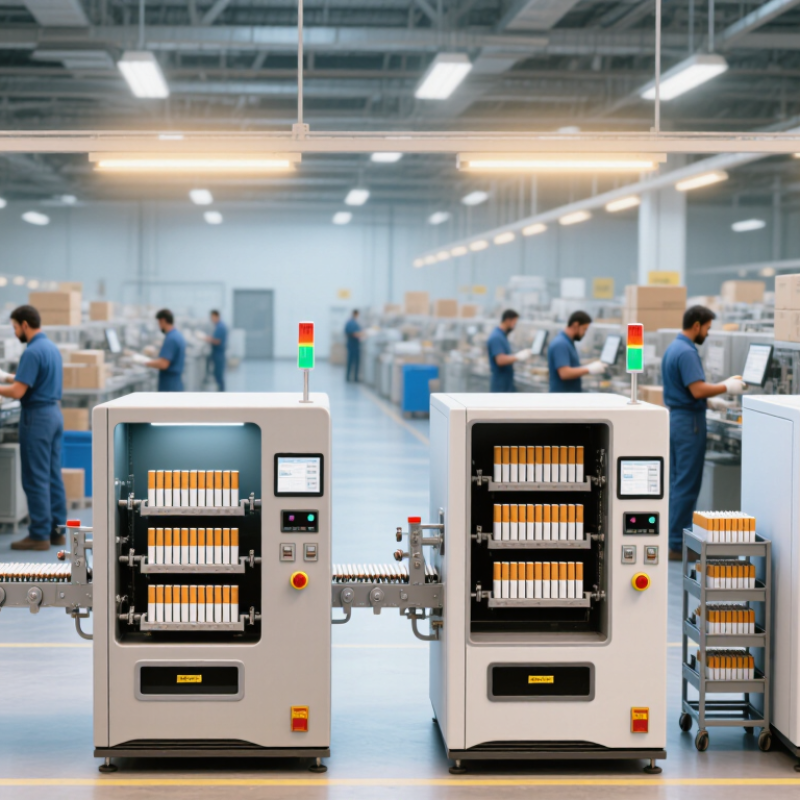
An automatic cigarette machine is a linked production system, not a single device. It typically meters cut tobacco, forms paper around a filter-and-tobacco rod, seals the seam, and cuts the rod to length. Sensors monitor paper tension and alignment; a jam or uneven feed can trigger a stop. Operators still need to check settings, material quality, and finished-product consistency.

The World Health Organization’s WHO report on the global tobacco epidemic 2023 estimated 1.25 billion tobacco users worldwide in 2022. This is public-health context, not a forecast of machine sales. For buyers, rated speed alone can be misleading: changeovers, rejected units, and cleaning affect usable output. A small paper wrinkle can cause repeated stoppages. Real production is rarely as smooth as a brochure suggests.

Tips: Ask suppliers for demonstrated output using your intended materials, and compare reject rates as well as speed. Check guarding, emergency stops, maintenance access, and operator training. Confirm that any purchase and operation comply with local rules. A machine may look simple; safe, consistent operation takes attention.


Common Types: Manual-Feed, Semi-Automatic, and Fully Automatic

Manual-feed, semi-automatic, and fully automatic machines differ mainly in how much handling they remove from the operator. With manual-feed equipment, workers position materials by hand, making it easier to inspect small batches or change setups. The trade-off is a slower pace and greater dependence on consistent operator technique. Small batches matter.

Semi-automatic machines handle selected steps while an operator loads, aligns, or checks materials. This can suit a growing facility that needs steadier output without redesigning its entire line. Buyers should inspect changeover time, guarding, cleaning access, and whether one operator can safely manage the intended workload. The middle option can still be a compromise.

Fully automatic systems coordinate feeding, processing, and transfer with limited routine intervention. They may raise throughput, but only when upstream supply, maintenance, and quality checks keep pace. The International Federation of Robotics’ World Robotics 2024 report counted 541,302 industrial robot installations worldwide in 2023. That figure describes factory automation broadly, not cigarette-machine sales, so it is useful context rather than a direct buying benchmark. Ask suppliers for verified output under comparable conditions, reject-rate data, and service requirements. Not always cheaper. A highly automated line can be a poor fit when demand fluctuates or skilled maintenance support is scarce.

2026 Top Automatic Cigarette Machine Types for Buyers — Common Types: Manual-Feed, Semi-Automatic, and Fully Automatic

Machine Type Material Feeding Typical Operator Role Automation Level Typical Production Setting Space and Utilities Buyer Considerations
Manual-Feed An operator places or replenishes tobacco and papers or tubes at the machine. Regular loading, starting, monitoring, and collection of finished cigarettes. Low; some forming or filling steps may be powered, but material handling relies largely on the operator. Small-scale or intermittent production where output requirements are modest. Usually the simplest setup; electrical needs depend on whether the machine is hand-operated or motorized. Check loading ergonomics, compatible consumables, adjustment range, cleaning access, and guarding.
Semi-Automatic Operators load materials or replenish hoppers; the machine automates selected forming or filling steps. Feeds materials, supervises operation, clears routine stoppages, and performs quality checks. Medium; some processes are automated, while loading, transfer, or packaging may remain manual. Small-to-medium production with a need for more consistent operation than a manual-feed setup. Requires a suitable installation area and, for powered models, an appropriate electrical supply. Confirm which steps are automated, changeover time, operator staffing, safety features, and service support.
Fully Automatic Integrated feeding systems supply materials to the production line, subject to replenishment and monitoring. Supervises the line, replenishes inputs, checks product quality, and responds to alarms or faults. High; multiple production stages can run in a coordinated line, depending on configuration. Continuous, higher-volume manufacturing environments with trained staff and established quality controls. Typically needs more floor space, power, planned installation, and integration with upstream or downstream equipment. Evaluate line capacity as a whole, changeovers, maintenance access, dust control, guarding, and applicable regulations.

Note: Actual output, staffing, dimensions, and utility requirements vary by machine design, product specification, and line configuration. Request verified technical documentation and confirm applicable safety and regulatory requirements before purchase.

How Machine Types Differ in Capacity, Features, and Use

2026 Top Automatic Cigarette Machine Types for Buyers

Automatic cigarette machines generally fall into tabletop, mid-capacity, and production-line categories. Tabletop units suit limited-volume work where floor space matters. Their controls are often simple, but loading and adjustment may require more hands-on attention. Small batches differ. Mid-capacity machines can handle steadier runs while keeping setup and cleaning manageable. Buyers should compare rated output with realistic operating conditions, since material, downtime, and operator skill affect actual throughput.

Production-line models are designed for continuous, higher-volume operation and may include automatic feeding, counting, or fault detection. These features can reduce repetitive handling, but they also add maintenance needs and require space for installation. Check whether parts are easy to access and whether cleaning steps are clearly documented. A high speed rating alone tells little about day-to-day reliability. That matters. The categories are not perfectly neat; some machines sit between them, so compare the equipment’s real operating range with your expected workload. Ask for specifications, service intervals, and a clear explanation of what the rated capacity measures.

2026 Top Automatic Cigarette Machine Types for Buyers

How machine types differ in capacity, features, and use

The ranges show indicative rated output in cigarettes per minute, not guaranteed sustained production. Actual capacity varies with machine configuration, product specifications, changeovers, and downstream equipment.

  • Compact single-rod maker: simpler setup and lower output; suited to smaller production requirements.
  • Industrial single-rod maker: higher throughput with automated feeding and process controls; suited to continuous production.
  • Twin-rod maker: produces two cigarette rods simultaneously for higher rated output; requires compatible downstream equipment.

How Buyers Can Compare Size, Output, and Operating Costs

When comparing automatic cigarette machine types, start with the space they will actually occupy. Measure the floor area, doorway width, and room needed to open guards or clean the feed path. Compact units may suit a small production room, while integrated lines need more clearance and trained operators. Check the machine’s rated output, but treat it as a test figure, not a promise. Ask how performance changes during routine stops, material changes, and quality checks. Real conditions matter.

Operating costs extend beyond the purchase price. Compare electricity use, routine maintenance, replacement parts, and the labor needed for setup and cleaning. A faster machine can cost more to maintain, and unused capacity still consumes space. Request a written estimate based on your expected hours and production volume. Look closely at dust control and accessible safety guards. Small details matter. If possible, observe a test run and note rejected units, noise, and how long adjustments take. Some estimates may still miss unexpected downtime; that uncertainty deserves attention before purchase.

Safety, Legal Compliance, and Maintenance Considerations

Automatic cigarette machines vary from compact single-line units to integrated systems that feed, form, and transfer products between stations. Buyers should compare guarding, emergency stops, access doors, and cleaning access—not output speed alone. OSHA’s machine-guarding rule, 29 CFR 1910.212, requires safeguards against hazards such as rotating parts and pinch points. Requirements differ by location, so confirm local permits, worker-safety rules, and equipment documentation before purchase.

The U.S. Bureau of Labor Statistics reported a 2.4 injury-and-illness rate per 100 full-time workers in private industry for 2023. This broad figure is not specific to cigarette machinery, but it reinforces the value of training and preventive maintenance. Check belts, sensors, dust extraction, and electrical connections on a documented schedule. Keep service logs and isolate power before maintenance, following applicable lockout procedures. A checklist can still miss a worn cable. Inspect closely.

Tips: Ask suppliers for risk assessments, guard diagrams, spare-parts lead times, and maintenance intervals. Test stop controls during commissioning, then record each test. Small details matter. Reassess the setup after moving equipment or changing its operating conditions.