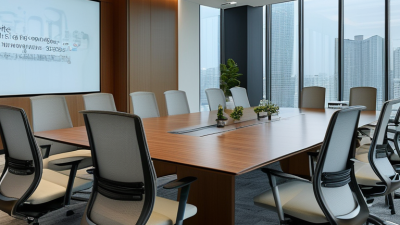
Who makes the best boardroom furniture in China? The answer depends on more than polished veneers and impressive factory photographs. Strong manufacturers combine engineering discipline, material knowledge, and consistent quality control. They understand how a twelve-seat table must support conversation, presentations, video calls, and daily executive work.
Charles Eames once said, “The details are not the details. They make the design.” That principle fits boardroom furniture perfectly. A reliable Chinese supplier should show precise edge finishing, stable table joints, quiet cable management, and comfortable seating for long meetings. Look closely at the meeting table’s underside. Can power modules be replaced without damaging the surface? Do chair mechanisms remain smooth after repeated use? Small tests reveal serious differences.
Leading factories often offer solid wood, veneer, laminate, metal, and custom dimensions. They may also provide prototypes, material samples, inspection reports, and installation support. However, customization can create weaknesses. A beautiful curved table may complicate shipping, maintenance, or future expansion. I have seen designs look excellent in a showroom but feel cramped after screens and documents arrive. That matters.
The best choice is not always the largest exporter. It is the manufacturer that explains limitations honestly, documents production clearly, and accepts independent inspection. Buyers should compare warranty terms, replacement parts, fire-performance documentation, and delivery records. Factory visits can help, but they do not replace testing. China’s boardroom furniture sector offers remarkable value and craftsmanship. Still, careful judgment remains essential. Convenience is not proof of quality.
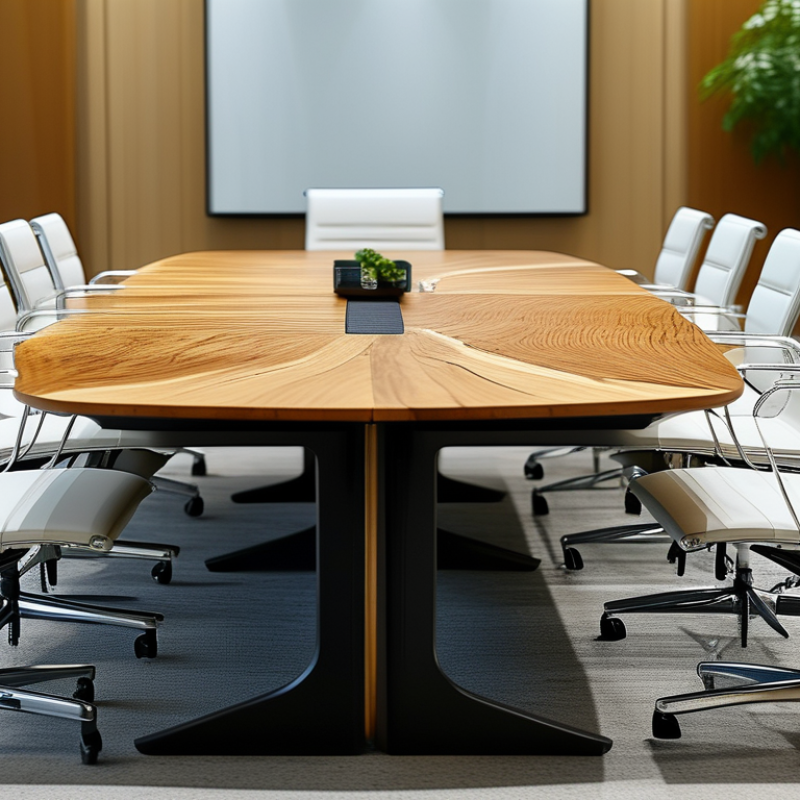
What Defines the Best Boardroom Furniture in China?
The best boardroom furniture is defined by performance, not appearance alone. A heavy table can look impressive, yet create poor legroom and difficult cable access. Professional buyers should check dimensions, load capacity, surface durability, and edge finishing. BIFMA’s ANSI/BIFMA X5.5 standard provides recognized testing guidance for desk products, including stability and strength. Chinese manufacturers with documented testing can offer more reliable purchasing decisions.
Ergonomics also matters during long meetings. The International Ergonomics Association links good workplace design with comfort, safety, and human performance. A practical boardroom needs chairs with adjustable lumbar support, breathable upholstery, and stable five-star bases. The table should leave clear knee space and support power, data, and video connections. Small details matter. A loose socket can disrupt an important negotiation.
Material responsibility is another defining factor. The World Green Building Council reports that green buildings can reduce energy use by up to 30 percent through better design and materials. Buyers should request formal material declarations, low-emission panel documentation, and responsibly sourced timber evidence. ISO 14001 certification can also indicate a structured environmental management system. However, certificates do not replace inspection. I would still examine a sample, test the chair personally, and review factory quality records. Some specifications look excellent on paper, but daily comfort may tell a different story.
China’s leading boardroom furniture manufacturers compete through engineering, not decoration alone. Their strengths usually include integrated design, precision machining, and flexible production. Many operate automated cutting lines beside skilled finishing teams. This combination supports large conference tables, concealed cable routes, and matching executive seating.
MARKET DATA Grand View Research valued the global office furniture market at about USD 58 billion in 2023, with Asia-Pacific among the fastest-growing regions. CSIL’s World Office Furniture report also identifies China as a major production and export base. However, market estimates use different product definitions. Buyers should compare the methodology, not only the headline figure.
The strongest Chinese suppliers often provide custom dimensions, fire-tested materials, acoustic panels, and modular power access. A well-built table should hide wiring without trapping heat. That detail matters during long meetings. Factory audits can reveal more than polished catalogues. Check edge sealing, veneer consistency, load testing, and replacement-part procedures. Some suppliers still overstate environmental claims. Ask for verifiable certifications and material records. I have found that small sample-room details often predict final delivery quality. That is not foolproof. Lead times may also change when imported hardware or special finishes are involved. Procurement teams should approve a physical prototype before signing a large order.
Who Makes the Best Boardroom Furniture in China?
The strongest boardroom furniture begins with material selection, not decoration. Solid wood creates warmth, while engineered wood offers better dimensional stability in changing climates. High-pressure laminate resists scratches and supports practical maintenance. Veneer can look refined, but its grain matching deserves close inspection. Ask for material samples under natural and artificial light.
Design should support conversation, movement, and technology. A long conference table needs balanced proportions, comfortable leg clearance, and discreet cable management. Rounded corners reduce visual heaviness and improve safety during busy meetings. Acoustic wall panels can soften echo in large rooms. However, excessive detailing may make a boardroom feel crowded. Elegant design is sometimes quieter than expected.
Craftsmanship reveals itself in small places. Check whether table joints remain even, drawer gaps align, and edge banding feels smooth. Inspect the underside, not only the showroom surface. Reliable manufacturers should provide drawings, material specifications, finish samples, and quality inspection records. Factory visits can also reveal storage conditions and assembly methods. Poorly protected timber may absorb moisture before production begins.
No supplier gets every detail right. A beautiful prototype may still need stronger hinges or better cable access. I have seen finishes that looked excellent but showed fingerprints too easily. That flaw matters in daily use. Compare samples, request a production mock-up, and test furniture with real equipment before approving large orders.
Key material and indoor-air-quality benchmarks to compare when evaluating boardroom furniture suppliers
Lower formaldehyde emissions indicate stricter panel-material requirements. Under China’s GB/T 39600-2021 classification, ENF, E0, and E1 represent maximum emission limits of 0.025, 0.050, and 0.124 mg/m³ respectively. In addition to certification, buyers should compare panel density, veneer quality, edge sealing, moisture resistance, hardware durability, joint accuracy, and surface finishing consistency.
Who Makes the Best Boardroom Furniture in China?
How to Evaluate Quality, Customization, and Ergonomics
The best manufacturer is not always the one with the largest showroom. Quality begins with materials, joinery, and process control. Inspect the table edge closely. It should feel smooth, sealed, and consistent under bright light. Check whether cable ports have clean cuts and protective rings. A stable boardroom table should resist movement when gently pushed. Ask for material samples, load-test records, and a clear warranty. Photographs are useful, but they cannot replace physical inspection.
Customization should solve practical problems, not create decoration for its own sake. Measure the room, doorways, screen position, and walking paths before approving drawings. A custom table may need hidden power modules, rounded corners, adjustable sections, or a shape that protects sightlines. Request a full-scale layout if the table is unusually large. Small errors become expensive after installation. This happens more often than buyers expect.
Ergonomics deserves equal attention. Allow comfortable knee clearance and enough space between chairs. A chair should support the lower back without forcing the user forward. Test the seat for at least ten minutes, not one quick showroom sit. Check armrest height, recline control, tabletop height, and glare from polished surfaces. Materials should also resist stains from coffee and frequent cleaning. I would still question any perfect sample room. Real boardrooms include cables, winter jackets, uneven floors, and tired users. A reliable supplier discusses these imperfections before production.
| Evaluation Dimension | What to Examine | Practical Quality Benchmark | Recommended Verification Method | Weight | Scoring Guide |
|---|---|---|---|---|---|
| Panel and Core Materials | Desktop substrate, edge construction, veneer or laminate consistency, and resistance to surface damage. | Stable engineered wood or solid wood components; uniform surface finish; sealed edges; no visible delamination, bubbling, open joints, or irregular color transitions. | Review material specifications, inspect a physical sample, and check exposed edges, cable cut-outs, joints, and underside surfaces. | 15% | 1–5 points |
| Structural Strength | Load-bearing capacity, frame rigidity, connection quality, and resistance to wobbling during daily meetings. | The table remains level and stable under normal distributed loads; frame connections are tight; legs and modesty panels do not flex noticeably during use. | Request load-test records where available; apply an evenly distributed test load; inspect welds, fasteners, brackets, and leveling feet. | 15% | 1–5 points |
| Surface Safety and Emissions | Formaldehyde emissions, coating safety, sharp edges, and contact-surface quality. | Materials should comply with the emissions and chemical-safety requirements specified for the destination market; edges should be rounded or properly softened in user contact zones. | Check third-party laboratory reports, declarations of conformity, coating documentation, and physical edge samples. | 10% | 1–5 points |
| Customization Capability | Ability to adapt dimensions, shapes, finishes, storage, power access, and meeting-room layouts. | Supplier can provide controlled drawings for custom sizes, table shapes, cable routes, pedestal locations, finishes, and coordinated seating layouts. | Compare the original brief with shop drawings, rendered layouts, finish samples, and a documented revision process. | 15% | 1–5 points |
| Cable and Technology Integration | Power modules, data access, cable management, monitor support, and service accessibility. | Cable routes are concealed but serviceable; power and data modules are positioned for users; components can be replaced without dismantling the entire table. | Inspect a working mock-up or sample; verify outlet dimensions, cable bend radius, access panels, ventilation, and replacement procedures. | 10% | 1–5 points |
| Ergonomic Dimensions | Table height, knee clearance, seating compatibility, viewing comfort, and usable personal workspace. | Table dimensions should support neutral seated posture, adequate leg clearance, comfortable screen viewing, and sufficient space for documents and conferencing equipment. | Verify dimensioned drawings; test with the selected chairs; assess knee clearance, arm position, monitor placement, and movement around the table. | 15% | 1–5 points |
| Chair Ergonomics | Adjustability, lumbar support, seat comfort, armrest clearance, and long-duration meeting performance. | Chair provides adjustable seat height and back support, stable base construction, smooth casters where required, and sufficient clearance beneath the conference table. | Conduct a user trial of at least 30 minutes; check adjustment range, mechanism operation, seat pressure, back support, and table-chair compatibility. | 10% | 1–5 points |
| Manufacturing Precision | Dimensional accuracy, repeatability, finish consistency, and assembly tolerances. | Components fit together without forced alignment; gaps are consistent; panels are square; finish tone and sheen remain consistent across the complete installation. | Measure samples against approved drawings; inspect a pre-shipment unit; compare multiple panels and components under consistent lighting. | 10% | 1–5 points |
| Delivery and Installation Control | Packaging, labeling, site coordination, installation accuracy, and protection of finished surfaces. | Parts are labeled by room and assembly sequence; packaging protects corners and surfaces; installation includes leveling, cable testing, and final quality inspection. | Review packing lists, installation drawings, delivery procedures, damage claims process, and an installation completion checklist. | 5% | 1–5 points |
| Warranty and After-Sales Support | Warranty scope, spare parts, response time, maintenance guidance, and correction of defects. | Written warranty terms identify coverage, exclusions, response procedures, replacement-part availability, and responsibilities for installation or transport damage. | Review the contract, warranty document, service-level commitments, spare-parts list, and escalation process before purchase. | 5% | 1–5 points |
| Recommended Evaluation Result: Select the supplier with the highest verified weighted score, not simply the lowest quotation. | 100% | Maximum: 5.0 | |||
Who Makes the Best Boardroom Furniture in China?
Choosing the Right Chinese Supplier for Your Boardroom Project
Choosing a Chinese supplier for a boardroom project requires more than comparing quotations. The right partner should understand executive seating, cable management, acoustics, and daily commercial use. Ask for factory photographs, production records, and recent project references. A polished showroom is not enough. Inspect veneer matching, edge treatment, welds, drawer alignment, and table joints. These details reveal practical manufacturing discipline.
Request a complete material schedule before approving the design. It should identify board cores, surface finishes, hardware, glass thickness, and required fire-performance documents. Do not accept vague terms like “premium wood.” Specify moisture resistance and acceptable color variation. A physical sample remains essential. Screens often hide grain differences. For large tables, confirm panel dimensions, access routes, and on-site assembly responsibilities. A supplier may produce excellent furniture yet struggle with installation coordination.
Reliable communication matters as much as workshop capability. Choose a team that answers technical questions clearly and records revisions. Use approved drawings with dimensions, cable positions, power access, and finish codes. Set inspection points before packing, not after delivery. No process is perfect. I once underestimated doorway clearance on a conference table, creating an avoidable delay. That mistake changed my checklist. Discuss packaging, replacement parts, warranty response, and installation training in writing. Keep the signed checklist with the shipment file.
Fast, modern and
At your fingertips
Tremain´s Blaze fast program
Was created for customers
That need product FAST!
Download catalog
Blaze Catalog