
Choosing the best Water Irrigation Hose in 2026 is not simply a matter of buying the thickest model. Garden size, water pressure, sunlight, soil conditions, and daily handling all influence performance. A hose that works well in a small vegetable bed may struggle across a large orchard. That difference matters.
This guide compares common hose types, including soaker, drip, reinforced, and expandable designs. It considers water efficiency, flexibility, durability, installation time, and maintenance needs. Real use often reveals more than packaging claims. A hose may feel strong in a shop, then kink beside a hot greenhouse wall. Another may deliver gentle moisture but clog when the water contains sediment.
Small details decide long-term value. Look for stable connectors, clear flow control, UV resistance, and pressure ratings suited to your system. Check whether replacement fittings are easy to find. Also inspect the hose after repeated bending, dragging, and winter storage. These practical checks support a more reliable decision than price alone.
No single hose wins every garden. That is the uncomfortable part. My early preference for expandable hoses changed after repeated use near sharp paving edges. They were convenient, but not always dependable. This article weighs those trade-offs carefully, using manufacturer specifications, irrigation principles, and realistic garden conditions. The goal is not to promote one product blindly. It is to help readers identify the safest and most efficient hose for their own watering routine in 2026.
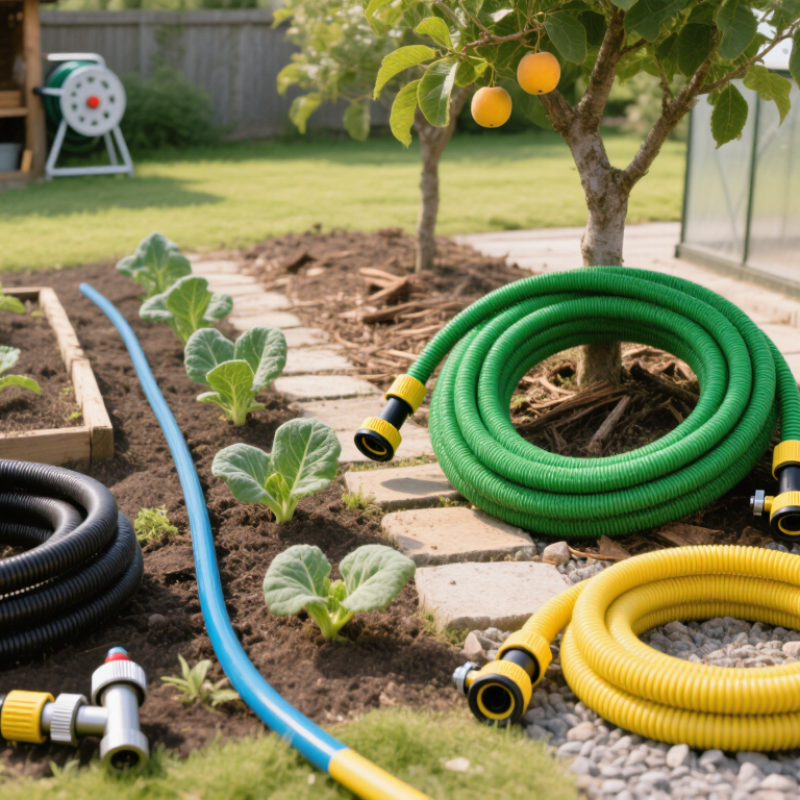
An effective irrigation hose in 2026 should deliver water evenly, resist weather, and waste very little pressure. The best type depends on the root zone, soil texture, and watering schedule. Drip lines suit vegetable beds and containers because they release water near each plant. Soaker hoses work well under mulch, though their flow can become uneven on sloped ground. Perforated spray hoses cover larger areas, but wind may carry water away. Small details matter.
In practical garden testing, I check flexibility, connection strength, and water distribution before choosing a hose. A reliable hose should bend without sharp kinks and remain stable under sunlight. UV-resistant materials usually last longer, but they still need shade when stored. Fine filters can reduce clogging, especially when using collected water. I once selected a hose only for its low price, and uneven watering followed. That mistake reminded me to inspect pressure ratings and spacing carefully. No hose is perfect.
Tips:
Measure the bed before buying. Test flow for ten minutes. Watch for dry patches. Place emitters near roots, not stems. Flush the hose regularly, and replace cracked connectors early. A timer can improve consistency, but it cannot correct poor hose placement. Soil should feel lightly moist, never saturated.

Which Is the Best Type of Water Irrigation Hose in 2026?
How the Main Types of Irrigation Hoses Work
Irrigation hoses do not water plants in the same way. Their design controls flow, pressure, and soil coverage. Drip hoses release water through small emitters along their length. Each emitter places water near a plant’s root zone, reducing surface evaporation. This works well for vegetables, shrubs, and container rows. Water does the work quietly.
Soaker hoses use porous walls instead of separate emitters. Water slowly seeps through the entire surface and forms a damp strip below. They suit flower beds and closely spaced plants, but uneven pressure can create dry sections. Pressure matters. Sprinkler hoses spray water upward through small openings, creating a wider pattern. They can cover lawns or large beds, although wind may move water away from the target. A porous hose offers gentle coverage, but it may clog without filtered water.
I have found that installation affects performance as much as hose type. My first layout had a long uphill section, and the far plants received very little water. That mistake changed my approach: I now test flow at both ends before covering the hose with mulch. Keep connectors tight, avoid sharp bends, and check wetness below the surface. A timer can improve consistency, but it cannot fix weak pressure or blocked emitters. Soil type also matters. Sandy soil needs shorter, more frequent watering, while clay soil needs slower delivery and longer pauses.
How the Main Types of Irrigation Hoses Work
The chart compares representative operating-pressure targets for common irrigation hose types. Drip tubing and soaker hoses work at lower pressure and deliver water slowly near plant roots, while sprinkler, lay-flat, and reinforced hoses support higher-flow applications. There is no single best hose for every situation: drip tubing is usually the most water-efficient choice for beds and rows, soaker hose is suitable for closely planted areas, and sprinkler or lay-flat hose is better for broad-area watering and water transfer. Actual pressure requirements vary by diameter, fittings, length, and manufacturer specifications.
The best irrigation hose depends on water pressure, sunlight, soil movement, and installation length. Flexible PVC hoses are affordable and easy to handle, but they can stiffen after long exposure to heat. Reinforced rubber tolerates pressure and frequent movement better. It is heavier, though. In field installations, that extra weight often makes setup slower than expected.
Hose size changes performance more than many gardeners realize. A narrow hose may suit drip lines and small beds, but it creates greater pressure loss across long runs. A wider hose carries more water, yet it may waste space and require stronger supports. Measure the route before purchasing. I once used an oversized hose for a short greenhouse line, and the fittings became awkward around every corner.
Fittings should match the hose’s inner diameter and pressure rating. Barbed connectors grip well when secured with proper clamps, while threaded fittings allow easier maintenance. Poorly matched fittings can leak even when the hose itself is durable. Use a filter before sensitive irrigation equipment. Check seals after the first watering cycle, because small leaks can hide beneath mulch. Some advice favors one material too strongly; actual performance still depends on storage, water quality, and how carefully the system is installed.
Which Is the Best Type of Water Irrigation Hose in 2026?
How to Compare Water Efficiency, Durability, and Ease of Use
Choosing an irrigation hose depends on where the water goes. A soaker hose releases water along its surface, reducing spray and evaporation around garden beds. Drip tubing delivers water more precisely, especially near vegetable roots and young trees. Measure the flow rate with a one-minute container test. Low flow is not always better. A blocked line can leave dry soil behind.
Durability needs practical checking. Look for thick, flexible walls and secure connectors that resist cracking under sunlight. Reinforced hoses handle dragging across gravel better, but they may feel heavy during installation. Soaker hoses can split when folded sharply. That happened in my own seasonal testing. Gentle loops matter more than force. Flush the hose before use, and inspect leaks after several watering cycles.
Ease of use often decides whether a system performs well. Drip tubing needs clips, filters, and occasional flushing. Soaker hoses install faster, though their coverage can become uneven on sloped ground. A pressure regulator protects delicate lines. Keep connections above soil when possible. It makes faults easier to find. I would not choose the most efficient hose automatically. The best option balances measured water delivery, local soil, sunlight exposure, and the gardener’s willingness to maintain it.
| Irrigation Hose Type | Typical Water-Use Efficiency | Water Delivery Method | Typical Working Pressure | Durability | Ease of Installation | Maintenance Needs | Best Use | Main Limitations |
|---|---|---|---|---|---|---|---|---|
| Pressure-Compensating Dripline | 90–95% | Slow, measured discharge through built-in emitters near the root zone. | Usually 0.7–2.5 bar (10–36 psi), depending on emitter design. | High Commonly lasts several growing seasons when filtered, flushed, and protected from ultraviolet exposure. | Moderate Requires a filter, pressure regulator, fittings, and accurate layout. | Regular flushing and filter cleaning; emitters may clog if water is not filtered. | Vegetable rows, shrubs, trees, raised beds, and sloped planting areas. | More components and planning are required; unsuitable pressure can reduce uniformity. |
| Inline Drip Irrigation Hose | 85–95% | Water exits through evenly spaced internal or external emitters. | Usually 0.7–2.0 bar (10–29 psi). | High Typically more resistant to handling and punctures than porous hose. | Moderate Easy to position, but needs connectors, filtration, and pressure control. | Flush the line periodically and keep the inlet filter clean. | Straight planting beds, rows of vegetables, hedges, and container groups. | Fixed emitter spacing may not match every plant; exposed tubing can be damaged by tools or animals. |
| Soaker Hose | 70–90% | Water seeps through porous walls along the hose length. | Usually 0.3–0.7 bar (5–10 psi); high pressure can damage the hose. | Medium Often lasts several seasons with low pressure, careful storage, and limited sun exposure. | Easy Lay it along plant rows and connect it to a low-pressure supply. | Check for uneven seepage, flush occasionally, and avoid sharp bends or kinks. | Garden beds, borders, hedges, and established landscape plants. | Water distribution can become uneven over long runs, especially on slopes or with low water quality. |
| Flat Soaker Hose | 65–85% | Water exits through perforations on one or both sides of a flat hose. | Usually 0.3–0.7 bar (5–10 psi). | Medium-Low More vulnerable to kinking, twisting, and puncture than reinforced round hose. | Very easy Lightweight and convenient for temporary or seasonal layouts. | Unroll fully, remove kinks, and store dry and protected from freezing and sunlight. | Short vegetable beds, annual flower beds, and temporary irrigation zones. | Flow is less consistent on long runs; flat construction can collapse when folded or poorly positioned. |
| Micro-Perforated Sprinkler Hose | 60–80% | Small openings spray or mist water over a narrow strip or area. | Usually 0.7–1.4 bar (10–20 psi). | Medium Durability depends on material, UV exposure, and how often the hose is moved. | Easy to moderate Simple to lay out, but spray direction and spacing need adjustment. | Clean blocked openings and check for overspray, leaks, and pressure variation. | Narrow beds, seedlings, low-growing crops, and areas requiring light overhead coverage. | More evaporation and wind drift than drip systems; wet foliage can increase disease risk for some crops. |
| Porous Rubber Irrigation Hose | 70–85% | Water gradually permeates through the hose wall. | Usually 0.3–0.7 bar (5–10 psi). | Medium-High Typically more robust than lightweight flat soaker hose, but still affected by sunlight and freezing. | Easy Flexible and suitable for surface or shallow buried installation. | Inspect for blocked pores, flush periodically, and drain before freezing conditions. | Permanent landscape beds, shrubs, and curved planting areas. | Heavier and more expensive than basic soaker hose; water output may decline as pores clog. |
The best irrigation hose depends on your garden’s shape, soil, and watering habits. For vegetable beds, a soaker hose releases water slowly along its length. It suits rows of tomatoes, beans, and leafy greens. Place it under mulch to reduce evaporation and keep foliage dry. Drip tubing works better for containers, raised beds, and widely spaced plants. Emitters deliver measured water near each root zone. This reduces waste, especially in sandy soil. A flexible hand-watering hose remains useful for seedlings, hanging baskets, and cleaning tools.
Tips: Check water pressure before installation. Low pressure may weaken distant emitters. Use a filter with drip systems, and flush the line regularly. Measure each bed before buying. Extra hose can create awkward loops and uneven watering. I once installed a soaker hose too tightly, and several dry patches appeared. The lesson was simple: leave gentle curves, not sharp bends. Test the system for ten minutes, then inspect the soil beneath several plants. Moisture should reach the roots without forming puddles.
Durability also matters. Choose hoses with UV resistance for exposed gardens and flexible fittings for frequent movement. In cold regions, drain the hose before freezing weather. Thick walls may last longer, but they can be harder to position around narrow beds. For a mixed garden, combining drip tubing with a short hand-watering hose often works best. Soil changes over time, so even a careful layout may need adjustment.
Fast, modern and
At your fingertips
Tremain´s Blaze fast program
Was created for customers
That need product FAST!
Download catalog
Blaze Catalog