
Choosing the best Shoulder Press Machine involves more than comparing prices, brand names, or polished gym displays. In my experience, a machine that looks impressive may still feel awkward during a controlled press. A reliable model should support natural shoulder movement without forcing your elbows into one fixed path. Seat height, backrest angle, and handle position matter greatly. Even a small adjustment can change how your shoulders and wrists feel. Comfort matters, but comfort alone proves little.
This guide examines the practical details behind a confident purchase. It considers frame stability, resistance smoothness, range of motion, adjustability, and independent arm movement. These features affect both training quality and long-term usability. Manufacturer specifications deserve careful attention. However, warranty coverage, maintenance requirements, and user reviews can reveal more about daily performance. A large weight stack does not automatically create a better workout. I have seen strong-looking machines produce noisy, uneven resistance. That experience is easy to overlook.
No machine suits every lifter. That matters. The safest choice begins with your training goals, body proportions, available space, and previous shoulder experience. Qualified strength professionals can help assess movement limitations, especially after an injury. Whenever possible, test the machine before buying it. Notice whether your feet stay planted, your back remains supported, and the handles move smoothly. Check the padding, adjustment pins, cables, and frame welds closely. Some details seem minor until they fail. Real-world impressions can vary, so this guide will question popular assumptions rather than promise one universal winner.
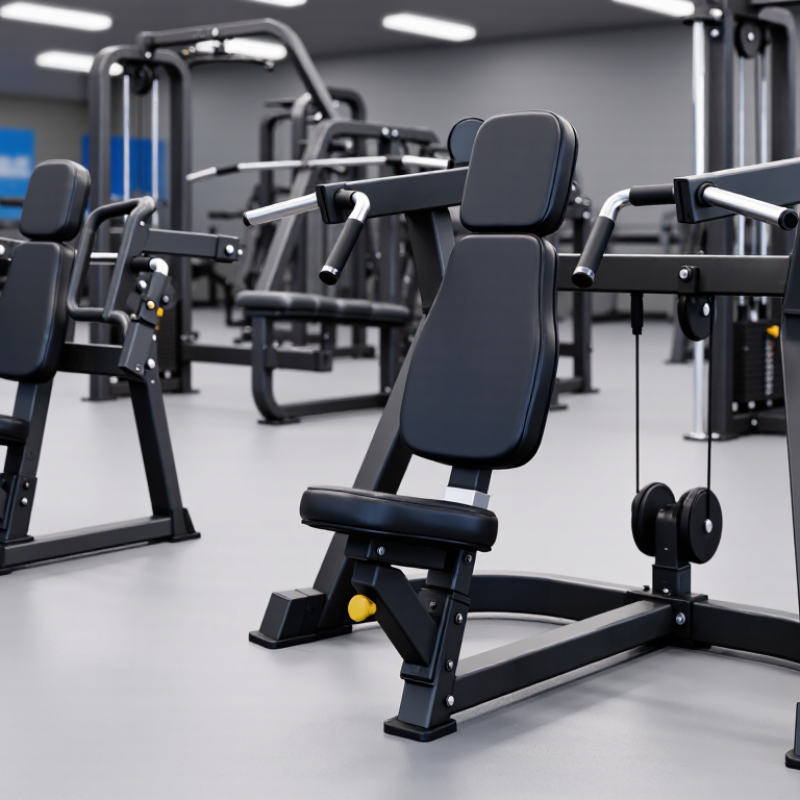
Choosing the best shoulder press machine starts with its training purpose, not its appearance. A selectorized machine suits beginners, rehabilitation, and controlled hypertrophy work. Its adjustable seat and weight stack reduce setup errors. A plate-loaded machine usually allows heavier loading and a stronger feeling of free movement. However, it demands better shoulder control. A cable-based press adds tension through a wider range, while independent handles can reveal strength differences between arms.
Traditional strength training ranked fifth in the ACSM Worldwide Survey of Fitness Trends 2024. The World Health Organization also recommends muscle-strengthening activities on at least two days weekly. These findings support regular resistance training, but they do not prove that one machine fits everyone. A fixed-path press may feel stable for a novice, yet its movement may not match every shoulder’s structure. In practice, seat height, grip angle, and pain-free motion matter more than impressive weight plates. No machine is perfect.
Tips: Set the handles near shoulder level, not beside your ears. Keep your ribs down and wrists stacked over elbows. Start with a load allowing 8–12 clean repetitions. Stop when sharp pain appears. Test both converging and fixed paths before choosing. I would also record range of motion and next-day discomfort, because a session can feel easy while irritating the joint later. A qualified coach or physical therapist should assess persistent pain, previous injury, or major movement limitations.

Choosing the best shoulder press machine starts with adjustability, not appearance. In my equipment evaluations, I check the seat height, backrest angle, and handle position. A suitable machine lets your elbows align comfortably below your wrists. Your feet should rest firmly on the floor.
Small adjustments matter.
Set the seat so the handles begin near shoulder level. They should not start behind your head or force your elbows too far outward. An adjustable backrest can support different body proportions and training goals. Tall users may need extra seat depth, while shorter users often need a lower starting position. I once focused too much on heavy resistance and overlooked seat stability. That mistake made the movement feel awkward.
Ergonomics should reduce unnecessary strain during every repetition. Handles with neutral or angled grips may help keep the wrists straighter. The back pad should support your upper back without pressing painfully against your neck. Test the machine slowly with light resistance. Notice whether your shoulders stay down and your ribs remain controlled. A qualified coach can check your posture from the side. The pressing path should feel smooth, without sudden stops or forced joint positions.
Range of motion deserves careful attention. You want enough movement to train the shoulders, but not a depth that causes discomfort. At the lowest point, your elbows should move naturally without excessive stretching. At the top, avoid locking out aggressively. Machine tracks are not always perfect for every body. Your comfort, control, and joint feedback should guide the final adjustment.
Assess adjustability, ergonomics, and range of motion against typical shoulder movement references.
How to read this chart: The values represent typical maximum active ranges of motion for a healthy adult shoulder, expressed in degrees. A suitable shoulder press machine should allow a controlled, pain-free pressing path that does not force the user beyond their comfortable range.
Selection guidance: Check whether the seat and backrest can be adjusted to align the handles with the shoulders, whether the grips support a neutral or comfortable hand position, and whether the machine provides a smooth range of motion without excessive shoulder elevation or joint strain.
Choosing a shoulder press machine starts with its resistance system. Weight stacks offer smooth, predictable loading and quick adjustments between sets. Plate-loaded designs can feel more natural, but they require careful plate changes and balanced loading. Cable systems create steady tension through much of the movement, although poor pulley alignment may affect the handle path.
From practical equipment checks, stability matters as much as resistance. A wide, rigid base should remain still when you press firmly. The seat must support your hips and upper back without forcing excessive arching. Adjustable handles can help different users maintain a neutral wrist position. Small details matter.
Safety depends on controlled movement, not only machine labels. Look for clear starting stops, secure adjustment pins, and an accessible emergency release. The range of motion should suit your shoulder mobility, rather than forcing a deep stretch. I once preferred a machine with a longer travel path, but it irritated my front shoulder after repeated sessions. That changed my evaluation method. I now test the machine slowly, using a light load, before judging its comfort.
Check whether the handles move independently or together. Independent arms may reveal strength differences, while linked arms often feel more stable for beginners. Ask a qualified fitness professional to inspect unusual noise, loose joints, or uneven resistance. A machine can look solid and still move poorly. Test it carefully.
| Machine Configuration | Resistance System | Resistance Characteristics | Stability | Adjustability | Safety Features to Check | Best Suited For | Main Selection Consideration |
|---|---|---|---|---|---|---|---|
| Selectorized Shoulder Press | Weight stack connected to a cable and pulley system | Quick, incremental loading with relatively consistent resistance throughout the movement | High | Adjustable seat height, back support, and starting position on many commercial models | Adjustable range-of-motion limiter, enclosed weight stack, non-slip handles, and a stable back pad | General fitness users, supervised facilities, and high-volume gyms | Choose a machine with smooth pulley travel and enough seat adjustment to keep the handles near shoulder level |
| Plate-Loaded Shoulder Press | Olympic or standard weight plates loaded onto machine arms | Direct loading allows substantial resistance; resistance may feel heavier or lighter at different joint angles | High | Usually includes seat-height and starting-position adjustments; loading is less convenient than a weight stack | Independent safety catches, mechanical start handles, positive stops, and secure plate-storage posts | Strength-focused users and experienced lifters | Verify that the safety stops can be set without limiting a comfortable overhead range of motion |
| Converging or Independent-Arm Press | Separate lever arms driven by weight stacks or weight plates | Arms move independently and may converge slightly, allowing separate loading for each side | High | Seat height, handle position, and starting range are commonly adjustable | Independent arm stops, controlled return movement, comfortable neutral-grip handles, and a secure back pad | Users seeking balanced development and a more natural pressing path | Check that both arms move evenly and that the starting position does not force excessive shoulder extension |
| Cable-Based Shoulder Press Station | Adjustable cable columns with handles or a press attachment | Variable resistance and movement path; loading depends on pulley ratio and cable angle | Medium | Highly adjustable pulley height, handle position, seat setup, and exercise angle | Locking pulley mechanism, secure cable attachments, visible weight-pin engagement, and adequate clearance around the user | Functional training areas and users who want multiple pressing variations | Prioritize frame rigidity and cable alignment because poor setup can reduce stability during heavier presses |
| Pneumatic Shoulder Press | Compressed-air resistance controlled by a pressure regulator | Low-inertia resistance with smooth loading; resistance is typically changed by adjusting air pressure | High | Seat, handles, start position, and resistance level are generally easy to adjust | Pressure-release control, adjustable range limiter, emergency stop where available, and protected moving parts | Rehabilitation, circuit training, and facilities requiring low-impact resistance | Confirm that the facility has a reliable air supply and that resistance changes are clearly visible to the user |
| Smith-Style Guided Shoulder Press Setup | Barbell moving along fixed vertical or slightly angled guide rails | Free-weight loading with a guided bar path; the fixed path may not suit every shoulder structure | Medium | Bench angle, seat position, and bar height can be adjusted, but the bar path is fixed | Adjustable safety catches, secure locking hooks, stable bench, and sufficient overhead clearance | Experienced users who prefer guided barbell pressing | Test the bar path before loading and ensure the safety catches are positioned below the lowest safe point |
| Seated Lever-Arm Press | Pivoting lever arms with weight plates or integrated resistance modules | Mechanical leverage changes through the range of motion and can create a strong peak at certain angles | Medium | Seat height, handle position, and starting angle vary by design | Controlled return mechanism, start-position lock, end stops, and padded back and seat support | Users who prefer a simple mechanical design and direct pressing feel | Choose a model that keeps the handles aligned with the forearms without forcing the elbows excessively outward |
Selection guide: For most users, a selectorized or converging-arm machine offers the best combination of stability, easy loading, and built-in safety. Plate-loaded and guided-bar systems are better suited to experienced lifters who can manage setup and loading safely. Always test the seat position, handle alignment, range-of-motion limits, and emergency or safety-stop function before purchase.
Choosing the best shoulder press machine starts with your goal, not the machine’s appearance. If you want general strength, choose adjustable resistance, stable back support, and handles that follow a natural pressing path. ACSM’s 2024 Worldwide Survey ranked traditional strength training fifth among global fitness trends. That popularity does not make every machine suitable. Beginners often need simple adjustments, clear movement limits, and moderate starting loads. An advanced lifter may prefer independent arms, heavier increments, and a converging path.
Match the design to your body. Seat height should place the handles near shoulder level, without forcing the elbows sharply behind the torso. A fixed path can build confidence, but it may not fit every shoulder. Independent handles can expose side-to-side weakness. That is useful, though occasionally uncomfortable. NSCA guidance emphasizes controlled technique, progressive overload, and individualized exercise selection. WHO’s 2020 physical-activity guidelines recommend muscle-strengthening work on at least two days weekly. Use that frequency as context, not permission to ignore recovery.
Tips: Test the machine before buying or programming it. Set the seat, press lightly, and check whether your wrists stay stacked over your elbows. Start with a load allowing two or three clean repetitions in reserve. Stop if pain feels sharp, unstable, or unlike normal muscle fatigue. Record the setting. Small details matter. Still, machine choice is partly subjective. A theoretically ideal path may feel awkward in practice. Reassess after two weeks.
Space should be measured before comparing features. Record the machine’s footprint, required clearance, and ceiling height. Leave enough room for users to enter safely and adjust the seat. A crowded training area creates awkward movement and faster equipment damage. Check whether the frame can pass through doors, lifts, and narrow corridors. Floor protection also matters, especially on concrete surfaces. Small details become expensive later.
Maintenance affects daily reliability more than many buyers expect. Inspect cables, bearings, adjustment pins, upholstery, and welded joints during a practical trial. Ask for a clear maintenance schedule and written access to replacement parts. A qualified technician should be able to identify unusual noise, uneven resistance, or loose hardware. Keep a simple service log. It takes minutes. I once underestimated cleaning access around a rear pulley, and that small mistake made routine inspections frustrating. A better design is not always the most complicated one.
Price should include delivery, installation, servicing, repairs, and expected downtime. Compare the total cost over five to ten years, not only the invoice price. A lower-priced machine may use thinner upholstery or less durable adjustment hardware. However, expensive equipment is not automatically better. Test several resistance settings and ask whether ordinary staff can maintain them correctly. Review the warranty terms carefully, especially coverage for structural parts and moving components. Long-term value comes from dependable use, easy servicing, and a design that still feels practical after thousands of repetitions.
Fast, modern and
At your fingertips
Tremain´s Blaze fast program
Was created for customers
That need product FAST!
Download catalog
Blaze Catalog