
Choosing a reliable Heat Transfer Label manufacturer requires more than comparing glossy catalogs. The real test appears on a production floor, beside a calibrated heat press, after repeated washing and stretching. A transfer may look perfect at application. It can still crack, lift, or leave a heavy plastic feel later.
This guide reviews ten leading manufacturers worldwide through practical criteria. These include adhesion performance, wash resistance, color accuracy, fabric compatibility, production capacity, minimum order quantities, technical support, and sustainability practices. It also considers whether suppliers provide testing data instead of vague promises. That distinction matters. A label designed for cotton may fail on nylon, performance polyester, or brushed fleece.
Textile-printing specialist Debbie McKeegan has said, “The best textile print respects the fabric, the process, and the person wearing it.” Her observation captures the central issue in this market. A Heat Transfer Label is not merely decoration. It affects comfort, garment appearance, brand consistency, and manufacturing efficiency. However, rankings are never completely objective. Supplier strengths can change by region, order volume, application equipment, and product category. A small fashion studio may value flexibility, while a global sportswear brand may prioritize automated inspection and dependable international logistics.
The companies below represent strong options, not universal answers. Buyers should request physical samples, laundering reports, compliance documents, and application guidance before committing. A careful comparison may feel slower. It often prevents expensive rework.
Heat Transfer Labels: How They Work Across Global Apparel Manufacturing
What Are Heat Transfer Labels and How Do They Work?
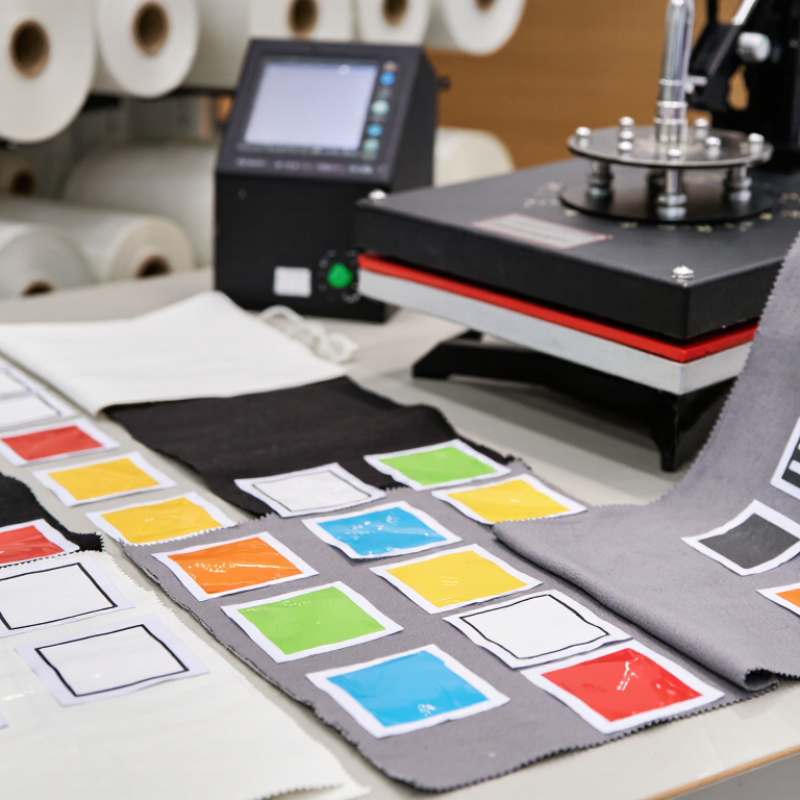
Heat transfer labels are printed graphics or text moved from a carrier film onto fabric with controlled heat and pressure. A heat press activates the adhesive layer. The design then bonds with fibers or the fabric surface. Unlike sewn labels, they create a smooth finish with little added bulk. This suits sportswear, underwear, uniforms, and soft garments. The label may show size, care instructions, a logo, or a batch code.
Manufacturers usually build labels through artwork preparation, ink printing, adhesive coating, cutting, and quality inspection. Temperature, pressure, and dwell time must match the textile. Cotton, polyester, blends, and coated fabrics can react differently. Experienced producers test wash resistance, stretching, color stability, and edge adhesion before shipment. Results can still vary. A setting that works on one fabric may fail on another. That uncomfortable detail deserves attention.
Tips: Request a fabric sample test before ordering large quantities. Check the label after repeated washing and drying. Keep artwork lines clear and avoid extremely fine details. Ask for application instructions, including temperature, pressure, and pressing time. Store unused transfers flat, dry, and away from direct heat. Small trials prevent expensive rework.

Comparing global heat transfer label manufacturers requires more than checking catalog size. A reliable review starts with application evidence. Ask whether the supplier has produced labels for cotton jerseys, nylon jackets, coated bags, or technical workwear. Material trials matter. Request wash-test records, adhesion results, and color-change data under defined temperatures. Look for testing methods, sample conditioning, and retest frequency. Vague claims are weak evidence. Production experience should be visible in tolerances, artwork control, and repeat-order consistency. One overlooked detail is edge lifting after repeated tumble drying. It can reveal poor process control.
Professional buyers should compare print resolution, ink safety documentation, curing control, minimum order quantities, lead times, and defect-handling procedures. Ask who approves a preproduction sample and how changes are recorded. A responsive technical team is valuable when fabric behavior changes between seasons. Global capability also means practical communication across time zones, stable packaging, export documentation, and traceable batch numbers. Price alone misleads. A cheap label can create relabeling labor and delayed shipments. Still, not every expensive supplier performs better; careful sampling remains essential.
Tips: Score each manufacturer against identical criteria. Keep a physical sample file. Record wash cycles, peel strength, hand feel, and delivery accuracy. Speak with recent customers when possible. Avoid relying on polished photos. I have found that a small pilot order often exposes issues that a sales presentation hides. The comparison may feel slower, but it produces more defensible decisions.
The leading ten manufacturers differ in scale, technology, and quality control. Several specialize in stretchable labels for sportswear, where thin films must survive repeated washing. Others focus on detailed transfers for uniforms, workwear, and fashion collections.
One manufacturer profile centers on high-volume roll production and automated inspection. Another emphasizes low-temperature application, helping protect recycled polyester and delicate fabrics. Some facilities offer silicone, polyurethane, reflective, and water-based systems.
Their strongest suppliers usually provide wash-test records, color references, and batch traceability. ISO 9001 certification appears frequently, while OEKO-TEX-compliant materials support responsible apparel sourcing. These details matter more than attractive samples.
Some produce small runs with fast digital sampling. Others build durable labels for outdoor garments, where abrasion and moisture expose weak adhesion quickly. Smithers’ industry analysis continues to highlight digital textile production and shorter customized runs as important growth areas.
Still, printed claims can be inconsistent. A label may pass laboratory washing but fail during industrial laundering. Buyers should compare application temperature, pressure, peel timing, fabric composition, and independent test results before approving production.
Top 10 Heat Transfer Label Manufacturers Worldwide: Materials, Printing Technologies, and Product Capabilities
Materials often separate capable heat transfer label manufacturers from ordinary suppliers. Polyester films suit smooth sportswear. Polyurethane films provide softer hand feel and better stretch recovery. Silicone options create raised, rubber-like details. PVC remains available, but buyers should question its environmental and recycling impact. According to Grand View Research, the global textile printing market is projected to grow at about 6.7% annually from 2024 to 2030. That growth increases demand for thinner, lighter, and more durable transfer materials.
Printing technology also shapes production quality. Screen printing delivers dense colors and reliable opacity for large orders. Digital printing supports gradients, photographs, and shorter runs with fewer setup steps. Sublimation works well on polyester fabrics, but it performs poorly on many cotton garments. Water-based inks can improve softness, although curing control becomes critical. Smithers’ digital textile printing research identifies expanding digital adoption, especially where customization and shorter lead times matter. Results vary by fabric.
A practical top-ten comparison should examine wash resistance, stretch testing, color accuracy, and minimum order quantities. Suppliers with roll-to-roll equipment can support high-volume production. Laser cutting helps create precise edges and small lettering. Some manufacturers also offer reflective, metallic, flock, and layered effects. Laboratory data is useful, but factory trials reveal more. A label may pass a controlled wash test yet crack on rough handling. That uncomfortable gap deserves attention. Capability claims should be checked against actual samples, technical sheets, and independent testing reports.
| Rank | Anonymous Manufacturer Profile | Primary Label Materials | Heat Transfer Technologies | Printing Technologies | Typical Color Capability | Durability Capability | Available Formats | Common Applications |
|---|---|---|---|---|---|---|---|---|
| 1 | Global high-volume textile transfer specialist | Polyester film, TPU, PU, nylon-compatible adhesive films | Hot peel, cold peel, stretchable and low-temperature transfers | Screen printing, digital transfer printing, rotary printing | CMYK, white underbase, spot colors and metallic effects | Designed for repeated washing, abrasion resistance and fabric stretch | Rolls, sheets, cut labels and pre-spaced graphics | Sportswear, fashion garments, uniforms and promotional apparel |
| 2 | Premium fashion-label producer | Soft-touch PU, polyester satin, recycled polyester films | Thin-film transfers, opaque transfers and soft-hand applications | Rotary screen, flat screen and digital inkjet printing | Fine-line graphics, gradients, photographic images and spot colors | High-definition appearance with resistance to peeling and cracking | Individual labels, continuous rolls and kiss-cut sheets | Underwear, swimwear, lifestyle apparel and premium branding |
| 3 | Industrial identification transfer supplier | Polyester, polyimide, engineered adhesive films and coated foils | High-temperature transfer, solvent-resistant and technical bonding systems | Screen printing, flexographic printing and digital variable-data printing | One to six spot colors, barcodes, serial numbers and fine text | Resistance to heat, oils, chemicals, abrasion and outdoor exposure | Roll stock, die-cut labels and custom-shaped decals | Electrical equipment, automotive parts, machinery and appliances |
| 4 | Short-run digital customization provider | Printable PU, PET carrier films and textile-compatible adhesive layers | Digital heat transfers, on-demand transfers and variable-image systems | Eco-solvent, pigment, UV and direct-to-film printing | Full-color graphics, gradients, photographs and personalized data | Good wash durability when applied at validated temperature and pressure | Single pieces, sample sheets, gang sheets and small rolls | Custom apparel, clubs, events, e-commerce and prototype production |
| 5 | Large-format graphic transfer manufacturer | PVC-free polyurethane films, polyester liners and reflective films | High-visibility, reflective, fluorescent and multilayer transfers | Screen printing, digital printing, laminating and precision cutting | Solid colors, reflective finishes, fluorescent tones and multicolor artwork | Suitable for outdoor visibility, laundering and moderate abrasion | Large sheets, rolls, pre-cut logos and layered constructions | Workwear, safety garments, outdoor clothing and team uniforms |
| 6 | Label converter focused on compliance marks | Nylon, polyester, satin, coated fabric and heat-resistant films | Care-label transfers, size marks, composition labels and safety transfers | Flexographic, screen, thermal-transfer and digital variable printing | High-contrast text, symbols, barcodes and one-to-four spot colors | Optimized for laundering, dry cleaning, ironing and label legibility | Continuous rolls, fan-folded stacks and individually cut labels | Care instructions, size identification, composition and traceability |
| 7 | Sustainable-material transfer producer | PVC-free PU, recycled PET carriers and water-based adhesive systems | Low-temperature, low-energy and solvent-reduced heat transfers | Water-based screen printing, digital pigment and transfer coating | CMYK, white, spot colors and transparent or matte finishes | Balanced softness, stretchability and wash resistance for apparel fabrics | Sheets, rolls, logos and digitally nested production layouts | Eco-conscious fashion, sportswear, promotional products and uniforms |
| 8 | Decorative and specialty-effect label manufacturer | PU, PET, metallic foils, holographic films and flock materials | Foil transfer, flock transfer, holographic transfer and embossed effects | Screen printing, foil stamping, embossing and digital overprinting | Metallic, mirror, glitter, matte, gloss and textured finishes | Effect-specific durability with controlled adhesion and surface stability | Sheets, rolls, die-cut pieces and multilayer assemblies | Fashion branding, accessories, footwear, bags and promotional goods |
| 9 | Automotive and technical textile transfer supplier | Polyester, polyamide, polyimide and heat-resistant coated textiles | High-pressure, high-temperature and multilayer bonding systems | Screen printing, gravure, flexographic and digital coding | Functional symbols, technical graphics, serial data and spot colors | High resistance to heat cycling, chemicals, abrasion and UV exposure | Rolls, sheets, die-cut components and engineered assemblies | Vehicle interiors, protective equipment, industrial textiles and electronics |
| 10 | Custom OEM and private-label transfer manufacturer | PU, PET, PVC-free films, woven label substrates and coated papers | Standard hot-melt, low-temperature, stretch and specialty transfers | Screen, offset, flexographic, digital and thermal-transfer printing | One-color marks through full-color CMYK and spot-color designs | Application-dependent resistance to washing, rubbing and general handling | Prototype samples, short runs, bulk rolls and finished die-cut labels | Private-label apparel, footwear, home textiles and consumer products |
Note: Actual transfer performance depends on the substrate, adhesive construction, application temperature, pressure, dwell time and care conditions.
Top 10 Heat Transfer Label Manufacturers Worldwide
Heat transfer labels serve apparel, sportswear, workwear, footwear, uniforms, and promotional products. Each industry demands different performance. Sportswear needs stretch recovery and strong wash resistance. Workwear requires durable adhesion against friction, heat, and repeated cleaning. Uniform suppliers may prioritize sharp text and consistent sizing across large orders. Footwear production often needs flexible labels that follow curved surfaces.
Choosing a supplier requires more than comparing unit prices. Request physical samples on your actual fabric, not only glossy catalog material. Check application temperature, pressing time, peeling method, and storage conditions. Ask for wash-test data and color consistency between production batches. Reliable manufacturers should explain their quality controls, material composition, lead times, and correction process. They should also understand regional labeling requirements and provide clear technical documents. A cheap label can become expensive after failed applications. This happens more often than buyers expect. Some suppliers communicate well before payment, then respond slowly when defects appear. That risk deserves attention.
Tips: Test at least three samples. Record every press setting. Inspect edges after washing. Confirm artwork approval in writing. Ask whether small replacement orders are practical. Sustainability claims also need evidence; request material details instead of accepting broad promises. A supplier may look suitable on paper, yet perform poorly on textured fabric. Leave room for a second evaluation.
Industries Served and Factors to Consider When Choosing a Supplier
Fast, modern and
At your fingertips
Tremain´s Blaze fast program
Was created for customers
That need product FAST!
Download catalog
Blaze Catalog