
Choosing the right Under Mount Kitchen Sink is more than comparing attractive photos and low prices. Global buyers must examine cabinet dimensions, countertop compatibility, bowl depth, drainage, material quality, and installation support. A sink may look excellent online, yet fail when its mounting rails meet a narrow cabinet. Measure carefully.
Master plumber and television host Richard Trethewey is widely respected for practical plumbing guidance. His advice is simple: “The best plumbing is the plumbing you don’t notice.” That principle matters here. A reliable Under Mount Kitchen Sink should sit securely beneath the counter, drain smoothly, resist staining, and remain quiet during daily use. Small details matter, including sound-absorbing pads, rounded corners, reinforced clips, and a properly placed drain opening.
This guide reviews the Top 10 Best Under Mount Kitchen Sinks for Global Buyers. It considers stainless steel, granite composite, fireclay, and other common materials. Each option is assessed through practical buying factors rather than appearance alone. We examine durability, cleaning effort, installation requirements, warranty coverage, and suitability for different kitchen sizes.
No ranking is flawless. Regional water conditions, cabinet standards, and installer skill can change the result. A premium sink may still disappoint if the countertop cutout is inaccurate. An affordable model may perform well when installed correctly. Buyers should verify product measurements, certifications, replacement parts, and supplier communication before ordering. The strongest choice is not always the most expensive one. It is the sink that fits the space, matches daily habits, and remains dependable after years of washing, cooking, and cleaning.
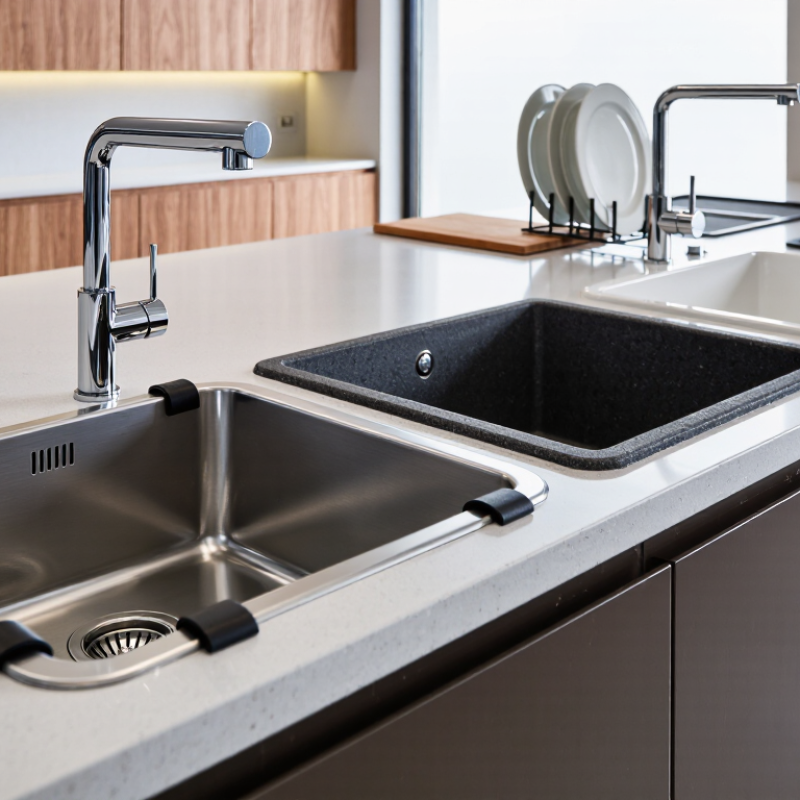
An undermount sink sits below the countertop, leaving a clean edge and no raised rim to trap crumbs. Wipe the counter directly into the basin. That small daily convenience matters in busy kitchens. It also creates a seamless look with stone, quartz, or solid-surface counters. Installation is less forgiving, though. The countertop must be cut and supported accurately, and the seal needs careful inspection.
For global buyers, material choice and local service conditions matter as much as appearance. The International Stainless Steel Forum’s 2017 recycling study estimated an average 85% end-of-life recycling rate for stainless steel. This supports stainless steel as a practical, recoverable option, but it does not guarantee every sink will be recycled in every market. Gauge, finish, bowl depth, and sound-dampening pads affect daily use. Check cabinet clearance and waste-fitting compatibility before ordering. A deep bowl can be useful, yet awkward for shorter users. I would not choose depth by appearance alone.
Ask suppliers for dimensional drawings, installation instructions, and corrosion-resistance details. Verify these against the countertop material and local water conditions. Keep a little skepticism. Product photos rarely show the underside support or the quality of the sealing work. An undermount sink can simplify cleanup, but poor installation can turn that advantage into a leak.

Choosing an undermount kitchen sink starts with the countertop, not the sink catalog. Stainless steel is relatively light and handles daily use well, while fireclay and granite-composite options are heavier and need secure support. Check cabinet width, bowl depth, and drain position before comparing sizes. A 30-inch cabinet may not accept a sink with a wide rim or bulky clips. Measure twice. Still, measurements can miss pipes and drawer rails; check inside the cabinet, too.
Configurations shape how the sink works. A single bowl gives more room for baking trays, while a double bowl separates washing from rinsing. Low-divide designs offer some separation without blocking larger cookware. Consider how you actually cook. A deep basin can reduce splashing, but it may feel uncomfortable if you are shorter or have a low counter. Surface finish matters as well: brushed steel can disguise small marks, though it is not scratch-proof.
Tips: Confirm the countertop material and installer’s support method before ordering. Undermount sinks rely on a clean, stable cutout and appropriate mounting hardware; stone and solid-surface counters are commonly suitable, while laminate edges usually need a compatible finished system. Ask for the exact cutout template, faucet-hole plan, and minimum cabinet dimensions. Dry-fit the sink when possible. Seal the rim carefully, and allow the sealant to cure before using the basin. Small installation details are easy to rush, and that is where leaks can begin.
Common sink widths are shown alongside a rough cabinet-width planning allowance of 3 inches beyond the sink width. Actual cabinet requirements vary by sink design, mounting hardware, countertop cutout, and local installation practice. Check the sink’s specification sheet and confirm the fit before purchase. Inch values are converted to centimeters in the chart tooltip.
Comparing the top 10 undermount kitchen sink models starts with your cabinet, not the product photo. Measure the cabinet’s interior width and note plumbing obstructions. A sink that looks spacious online may leave little room for clips or a garbage disposal. Check the cutout template and required cabinet dimensions before comparing bowl size.
Material changes daily use. Stainless steel is relatively light and resists rust, but its finish can show water spots and fine scratches. Listen for sound-dampening pads beneath the bowl; they can soften the clang of a dropped spoon. Thick coatings and sturdy construction matter, though a stated steel gauge alone does not prove overall quality. Inspect the finish, seams, and warranty details.
Then compare bowl shape and drain position. A rear-set drain can free space below, while a centered drain may suit existing plumbing better. Deep bowls hold stockpots, but they can make reaching the bottom uncomfortable. Try the dimensions against your own tasks. Awkward detail. Rounded corners are easier to wipe than sharp ones, though personal preference still counts. Compare installation instructions, included mounting hardware, and replacement-part support—not just price. A careful checklist beats a polished ranking, and even careful buyers may overlook one small fit issue.
A practical comparison of common undermount sink configurations. Dimensions are representative planning sizes; check the manufacturer’s cutout template and local installation requirements before purchasing.
| Model | Configuration | Overall Size (in / mm) | Typical Material | Bowl Depth | Minimum Cabinet Width | Best Suited For | Key Comparison Point |
|---|---|---|---|---|---|---|---|
| 1. Compact Single Bowl | Single bowl | 18 × 18 / 457 × 457 mm | Type 304 stainless steel | 8 in / 203 mm | 21 in / 533 mm | Small kitchens, studios, and secondary prep areas | Space-saving footprint; less room for large cookware |
| 2. Standard Single Bowl | Single bowl | 24 × 18 / 610 × 457 mm | Type 304 stainless steel | 9 in / 229 mm | 27 in / 686 mm | Everyday use in smaller or mid-size kitchens | Balances usable bowl space with a relatively modest cabinet requirement |
| 3. Large Single Bowl | Single bowl | 30 × 18 / 762 × 457 mm | Type 304 stainless steel | 10 in / 254 mm | 33 in / 838 mm | Washing baking trays, stockpots, and large dishes | Wide, uninterrupted bowl; requires a larger base cabinet |
| 4. Low-Divide Double Bowl | Double bowl with a low center divider | 33 × 19 / 838 × 483 mm | Type 304 stainless steel | 9 in / 229 mm | 36 in / 914 mm | Households that want two work areas and occasional room for larger cookware | Low divider makes it easier to position wide items than a full-height divider |
| 5. Equal Double Bowl | Two equal bowls | 32 × 18 / 813 × 457 mm | Type 304 stainless steel | 9 in / 229 mm | 35 in / 889 mm | Separating washing and rinsing or handling two tasks at once | Two distinct bowls; each bowl offers less width than a large single bowl |
| 6. Offset Double Bowl | Unequal double bowls | 33 × 19 / 838 × 483 mm | Type 304 stainless steel | 9 in / 229 mm | 36 in / 914 mm | Users who need one main bowl plus a smaller secondary bowl | More room in the larger bowl; bowl proportions vary by design |
| 7. Workstation Single Bowl | Single bowl with accessory ledges | 30 × 19 / 762 × 483 mm | Type 304 stainless steel | 10 in / 254 mm | 33 in / 838 mm | Meal preparation directly over the sink | Check accessory compatibility, ledge placement, and included components |
| 8. Fireclay Single Bowl | Single bowl | 30 × 18 / 762 × 457 mm | Glazed fireclay | 9 in / 229 mm | 33 in / 838 mm | Traditional or farmhouse-style kitchens | Heavy construction may require cabinet support; verify cutout and finished dimensions |
| 9. Granite Composite Single Bowl | Single bowl | 32 × 19 / 813 × 483 mm | Granite-composite material | 9.5 in / 241 mm | 35 in / 889 mm | Buyers seeking a non-metallic surface and a choice of colors | Confirm care instructions, heat guidance, and availability of matching accessories |
| 10. Copper Single Bowl | Single bowl | 30 × 18 / 762 × 457 mm | Hand-finished copper | 9 in / 229 mm | 33 in / 838 mm | Statement kitchens and distinctive interior designs | Patina and finish can change with use; check care needs and material thickness |
Under-mount kitchen sinks differ in more than appearance. Stainless steel is relatively light, resists everyday impact, and suits many modern kitchens. Its surface can show water spots and scratches, though a brushed finish may make marks less obvious. Fireclay has a smooth, sturdy surface, but its weight calls for strong cabinet support. Check the cabinet frame and countertop specifications before choosing it. Heavy sinks need careful planning.
Granite composite often dampens the sound of running water and resists common stains when cleaned promptly. Dark finishes may reveal mineral deposits, so wiping the bowl dry can help. Cast iron, typically coated with enamel, offers a glossy finish but is heavy; chips in the coating may need attention. Copper develops a changing patina. That may appeal to some owners and bother others. There is no maintenance-free choice.
Compatibility matters as much as material. Under-mount installation requires a countertop that can support an exposed cutout, such as properly sealed stone or a suitable solid surface. Many laminate tops are not designed for this edge detail. Confirm the sink’s dimensions, cabinet width, drain position, and faucet clearance with the installer. A deep bowl can hold large pans, yet may leave less room beneath for plumbing or storage. Small details matter. Care routines also vary: use a soft cloth and mild cleaner unless the manufacturer specifies otherwise. Harsh pads can dull finishes, and standing water may leave marks. Even careful planning cannot prevent every scratch; the practical goal is choosing a sink whose upkeep fits daily habits.
When comparing the top ten under-mount kitchen sinks, look beyond the listed price. A low-cost model may exclude mounting clips, a compatible drain, or sound-dampening pads. Check the full package before comparing quotes. Small omissions add up.
Confirm the sink’s material, bowl dimensions, and required cabinet width against your kitchen plans. Ask for written details on applicable product standards and test documentation, rather than relying on a vague “certified” claim. Warranty terms matter too. Read the exclusions. Coverage may differ for finish damage, installation errors, and everyday wear. I once focused too much on bowl depth and overlooked the cabinet clearance; that was a useful, if avoidable, mistake.
For global shipping, request the packed dimensions, gross weight, shipping method, and estimated delivery window. A sink can arrive safely yet still be difficult to move through a narrow doorway. Clarify who handles import charges, local delivery, and damage claims before payment. Ask how the unit is protected inside the crate, especially around corners and the rim. Photos help, but they do not replace clear written terms. Shipping estimates can shift, so leave some slack in renovation schedules.
Fast, modern and
At your fingertips
Tremain´s Blaze fast program
Was created for customers
That need product FAST!
Download catalog
Blaze Catalog