Why Choose Laser Bird Repellent for Bird Control?
Bird pressure is no longer a minor nuisance around airports, warehouses, farms, and solar facilities. FAA wildlife-strike data recorded 19,603 reported wildlife strikes in the United States during 2023, showing the continuing scale of the problem. Most involved birds. The FAA’s Wildlife Hazard Mitigation Program also stresses habitat management, monitoring, and layered deterrence rather than one universal device.
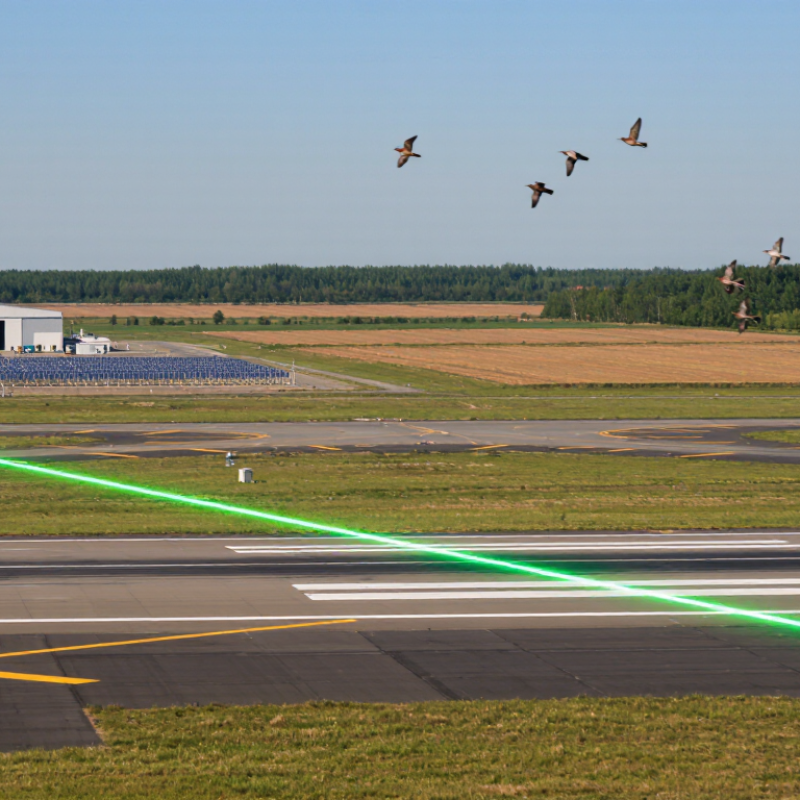
Laser Bird Repellent offers a non-contact option for daylight bird dispersal. A moving green beam can cross a runway edge, crop row, or warehouse roof without touching birds. The visual movement may encourage birds to leave before roosting becomes established. The details matter. Performance depends on species, weather, background contrast, operating distance, and correct beam management. It is not a magic wand.
Dr. Richard A. Dolbeer, a recognized wildlife-hazard-management expert, has written, “Wildlife strikes are a serious aviation safety problem.” His work supports a practical lesson: deterrence should reduce risk, not simply move birds elsewhere. FAA guidance and USDA Wildlife Services materials recommend site assessment, exclusion, sanitation, and ongoing observation alongside active deterrents. Laser Bird Repellent can fit that broader strategy when trained personnel use it responsibly and document results. Some sites may need several methods. Others may discover that food waste, standing water, or nesting surfaces cause the real problem. That is easy to overlook. A reliable introduction should admit this limitation, because measured bird counts and incident records matter more than impressive equipment claims. Further evaluation should examine bird behavior, operator training, maintenance, and safety controls before purchase.
Sources: FAA, Wildlife Strikes to Civil Aircraft in the United States, 2023; FAA, Wildlife Hazard Mitigation Program; USDA APHIS Wildlife Services, Managing Wildlife Hazards to Airports.
What Is Laser Bird Repellent and How Does It Work?
Laser bird repellent uses moving beams of visible light to discourage birds from settling in a protected area. The beam sweeps across roofs, fields, ponds, or warehouse walls. Birds often interpret this motion as an approaching threat and move away before landing. The effect is visual. No loud blast is required.
In practical bird-control work, timing matters greatly. A laser is most useful during regular flight and roosting periods. Operators can guide the beam across nesting ledges, rafters, and nearby trees. Birds may react quickly at first, but some species learn repeated patterns. Results vary. Weather, daylight, building design, and bird behavior all influence performance.
Good practice requires trained handling and careful site assessment. The beam should never point toward people, vehicles, aircraft, or reflective surfaces. It should also avoid direct exposure to birds’ eyes. Combining laser use with netting, access changes, and cleaner food-storage areas can improve reliability. I have seen teams expect instant results, then overlook open waste bins nearby. That mistake is common. Laser bird repellent is not magic; it works best as part of a monitored, humane control plan.
Bird Species and Locations Suitable for Laser Repellent
Laser bird repellent is most suitable where bird pressure is predictable and the operating area can be controlled. Practical assessments often identify pigeons, starlings, gulls, and some geese as responsive targets. These species may avoid moving light across feeding, roosting, or nesting areas. Results vary. Individual birds can become less cautious when food remains available. A clean site matters.
Open agricultural locations are strong candidates. Orchards, vineyards, vegetable fields, grain stores, and fish ponds provide visible paths for a moving beam. Lasers work best during dawn, dusk, or overcast conditions, when the light remains noticeable. Bright midday sunlight may reduce performance. Warehouses, loading yards, and building roofs can also benefit, especially where birds gather on ledges. The surrounding layout should allow safe, controlled movement.
Dense trees, busy public spaces, and narrow courtyards are less suitable. They create blocked sightlines and increase risks for people, drivers, and nearby aircraft. A trained operator should map bird activity, remove food sources, and adjust timing before relying on the device. Protected species require careful identification and lawful handling. It requires judgment. Laser control is not magic. Some sites may respond better to netting, cleaning, or habitat changes. That limitation deserves honest attention.
Why Choose Laser Bird Repellent for Bird Control?
Common bird species and settings where non-contact visual deterrence may be evaluated. A value of 1 indicates that the species is commonly encountered in that setting; 0 indicates that it is not a typical primary setting.
Laser bird deterrence can reduce reliance on physical barriers and chemical methods when legally permitted and operated by trained personnel. Never aim lasers at aircraft, vehicles, people, or nearby residences, and check local wildlife regulations before deployment.
Safety, Limitations, and Maintenance Requirements
Laser bird repellents can help where visual deterrence is practical, but safety must guide every installation.
The FAA’s 2023 wildlife-strike database recorded more than 19,000 reported strikes involving U.S. civil aviation. This figure shows why responsible bird management matters near runways, warehouses, and food-handling sites. Lasers do not remove nests, food, or water. They create an aversive visual stimulus.
Under IEC 60825-1, laser products are classified according to possible eye and skin hazards. Operators need risk assessments, controlled aiming zones, warning signs, and proper training. Never direct a beam toward aircraft, roads, homes, or reflective glass. USDA APHIS Wildlife Services guidance notes that birds often respond better in low-light conditions. Repeated exposure can also cause habituation. Daylight results may disappoint. That limitation deserves honesty.
Maintenance is not optional. Inspect the lens, housing, alignment, power supply, and weather seals each week. Clean dust from the optics with approved materials. Record bird activity and change operating patterns when avoidance weakens. A single laser rarely solves a complex site problem.
Tips: Combine laser use with sanitation, netting, habitat reduction, or acoustic methods when appropriate. Keep a service log. Review it monthly. If workers report eye discomfort or unusual reflections, stop operation and reassess the setup immediately. Practical experience suggests that poor positioning, not weak equipment, often causes disappointing results.