China Best Furniture Work Manufacturers for Global Buyers

China remains a major sourcing destination for global furniture buyers, offering broad production capacity across seating, case goods, office furnishings, and custom pieces. The opportunity is substantial, but choosing a supplier takes more than comparing quoted prices. Grand View Research estimated the global furniture market at USD 677.09 billion in 2023 and projected a 5.9% compound annual growth rate from 2024 to 2030. That growth raises the stakes for reliable product quality, clear specifications, and consistent delivery.

For buyers exploring China best furniture work manufacturers, industry reports provide useful context, not a substitute for factory checks. CSIL’s World Furniture Outlook tracks international furniture production and trade, helping buyers assess sourcing patterns alongside market demand. Ask manufacturers for material specifications, finish samples, production timelines, and inspection procedures. Then compare those details against the needs of your market and product category. A solid wood sample under daylight can reveal color variation that a catalogue image hides. Small checks matter.

The phrase furniture work covers a wide range of capabilities, from precise joinery to upholstery and finishing. Yet a polished website does not prove that every production run will meet the same standard. No market report can test a drawer’s smoothness or confirm how a supplier handles a delayed sample. Buyers should verify claims through documented records, direct questions, and practical sample reviews. Even then, some uncertainty remains. That deserves honest attention.
China Best Furniture Work Manufacturers for Global Buyers

What Furniture Manufacturers in China Produce for Global Buyers

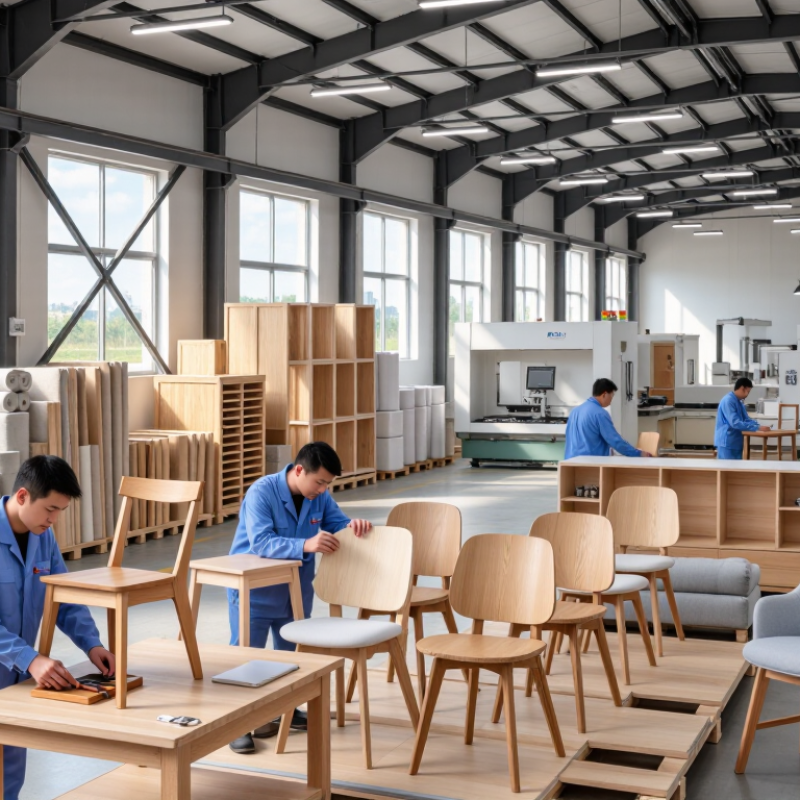
Chinese furniture manufacturers supply far more than household sofas and tables. Their output commonly includes upholstered seating, solid-wood and panel-based bedroom sets, dining furniture, office desks, shelving, kitchen cabinets, and outdoor pieces. Some factories handle design, cutting, edge-banding, finishing, upholstery, and packing under one roof. Others specialize in a single stage. Buyers should check which processes are actually in-house.

CSIL’s World Furniture Outlook 2024 puts global furniture production at about US$500 billion, showing the scale and variety of the market. For global buyers, Chinese suppliers can adapt dimensions, finishes, fabrics, hardware, and carton layouts to project needs. UN Comtrade tracks furniture trade in categories such as seats (HS 9401) and other furniture (HS 9403), useful when comparing product types and trade flows. A practical specification should name the panel grade, surface finish, fabric composition, load requirements, and packaging standard. Details matter.

A sample can look excellent under showroom lighting, yet arrive with a finish that feels different in daylight. That gap is easy to overlook. Buyers benefit from checking production samples, written tolerances, and inspection records before approving a full order. Not every factory offers the same customization depth, and a low unit price may exclude packaging or testing costs.

How China’s Furniture Manufacturing Industry Is Organized

China’s furniture industry is not one enormous factory. It works more like a connected production network. Material suppliers provide timber, panels, metal, foam, fabric, and hardware. Specialized workshops may produce frames, tabletops, upholstery, or finished surfaces. Larger manufacturers coordinate these parts and manage final assembly. This division helps buyers compare specific capabilities rather than assuming every factory can make every product.

Production is often organized around regional clusters, where factories and supporting suppliers operate within practical reach of one another. A buyer might find one supplier cutting panels, another sewing covers, and an assembly facility preparing cartons nearby. This arrangement can improve coordination, but it also means a product may pass through several hands. Ask who handles each production stage. Details matter.

Reliable evaluation goes beyond a showroom sample. Check material specifications, construction drawings, finish tolerances, and packaging requirements before approving an order. Request dated progress photos or inspection records when direct visits are difficult. A polished sample can still hide uneven stitching or a weak drawer joint. I have seen small specification gaps create avoidable rework; a written checklist helps, though it cannot replace careful follow-up.

China’s Furniture Manufacturing Industry: 2023 Scale

How the industry is organized: The figures show the scale and profitability of larger manufacturers. The wider supply chain also includes material and component suppliers, specialist workshops, OEM/ODM factories, and export-oriented suppliers.

Operating revenue: RMB 655.7 billion; total profit: RMB 34.6 billion. 2023 figures for furniture manufacturing enterprises above designated size. Source: China National Furniture Association, based on National Bureau of Statistics data.

Which Factors Define a Reliable Chinese Furniture Manufacturer

China Best Furniture Work Manufacturers for Global Buyers

Which Factors Define a Reliable Chinese Furniture Manufacturer

A reliable manufacturer can explain how a product is made, not just show attractive showroom pieces. Ask for a clear materials list, production schedule, and quality-control records. Start with the product, not the brochure. For a wooden chair, check timber specifications, joint construction, finish samples, and measured dimensions. For upholstered furniture, ask about fabric composition, foam density, stitching, and frame materials. Specific answers matter.

Consistency is easier to judge when the factory shares inspection steps and sample results. Ask how it checks dimensions, surface defects, hardware fit, and packaging before shipment. Request a pre-production sample, then compare it with the finished order under the same criteria. Useful evidence may include product test reports and material documents, where applicable to the product and destination market. Verify what each document covers. A certificate title alone proves little.

Communication deserves equal scrutiny. Can the team confirm drawings, tolerances, carton sizes, and lead times in writing? Do they flag design problems before production? Clear updates reduce costly surprises. Still, a polished audit file does not guarantee every batch will match. I would check references, inspect a production run when practical, and agree on remedies for defects before ordering. Some details may be missed; leave room for a second review.

How Global Buyers Select and Verify Furniture Suppliers

China Best Furniture Work Manufacturers for Global Buyers

Selecting a furniture supplier takes more than comparing catalog photos and unit prices. Ask for a current factory profile, production capacity, and clear details about materials, finishes, and quality checks. For a wooden cabinet, confirm the board type, edge treatment, hardware, and moisture-control process. Request recent production photos or a video call, then compare the workshop details with the quotation. Details matter.

A sample can reveal fit, finish, and packaging quality, but one sample cannot prove consistent production. Check whether the supplier can repeat key measurements and finishes across a small batch. Ask how defects are recorded and corrected, and who inspects goods before shipment. Verify business documents and references through independent channels where possible. Online evidence is useful, but it can be incomplete. A polished showroom does not tell the whole story.

Tips: Put specifications, tolerances, approved materials, and inspection steps in writing. Keep dated sample photos and signed records. Ask direct questions, and note vague answers. No supplier is perfect; the important thing is whether problems are reported early and handled clearly.

China Best Furniture Work Manufacturers for Global Buyers - How Global Buyers Select and Verify Furniture Suppliers

A practical supplier-selection checklist. Set acceptance limits in the purchase contract according to the product, destination market, order volume, and applicable regulations; the checks below are not universal pass/fail thresholds.

Selection dimension What to request How to verify Buyer decision guidance
Product and process fit A product list, construction details, material options, and a description of in-house and subcontracted processes. Compare the information with the requested furniture type, drawings, bill of materials, and factory tour or video walkthrough. Confirm who is responsible for design changes, component sourcing, assembly, finishing, and final inspection.
Legal business identity Registered business details, business license, factory address, and the legal entity named on the quotation and contract. Check that the documents, address, contract, invoice, and payment beneficiary are consistent; arrange an independent site audit when appropriate. Resolve mismatches before making a deposit or signing a purchase agreement.
Production capacity and lead time A production schedule, current workload, critical-process capacity, and a written estimate for sample and mass-production lead times. Review recent production records where available and compare the proposed schedule with the order quantity, process steps, and shipping plan. Treat capacity figures as supplier-provided until supported by records or an audit; include milestone dates in the contract.
Materials and traceability Specifications for wood, panels, metal, upholstery, adhesives, finishes, and hardware; supplier or batch records where relevant. Match material declarations and purchase records to the approved bill of materials. For FSC claims, check the certificate and scope through the FSC public certificate database. Do not treat a certificate as proof that every product is covered; confirm the certificate holder, validity, scope, and product claim.
Product safety and performance Test reports for the exact product or a technically representative model, identifying the test standard, laboratory, sample, and test date. Select standards for the furniture category and destination market. Examples include EN 12520 for domestic seating, ANSI/BIFMA X5.1 for general-purpose office chairs, and ANSI/BIFMA X5.5 for desk products. Check that the report covers the supplied design and materials; confirm current applicable requirements with the destination-market regulator or qualified test laboratory.
Emissions and chemical compliance Material declarations and applicable emissions or chemical test reports for composite wood, finishes, adhesives, and upholstery. For products sold in the United States, assess whether TSCA Title VI requirements apply to regulated composite wood products. For the EU, review relevant REACH restrictions and applicable product rules. Requirements depend on product composition and market. Verify the exact product category, test method, and required documentation before shipment.
Quality control and defect handling Inspection procedures, sample records, nonconformity reports, corrective-action process, and proposed inspection criteria. Agree on measurable product specifications and an inspection plan; inspect the approved sample and, for suitable orders, arrange pre-shipment inspection. Define defect categories, sampling method, acceptance limits, rework responsibilities, and remedies in writing rather than relying on a generic quality claim.
Samples and change control A production-intent sample, signed specification, approved finish or fabric swatches, and a process for documenting changes. Keep an identified reference sample and compare production goods against the approved drawings, dimensions, materials, color, and workmanship requirements. Require written approval before changes to materials, components, dimensions, finish, or subcontractors.
Packaging and shipment readiness Packaging specifications, carton dimensions and weights, loading plan, shipping marks, and assembly instructions where needed. Review a packed sample and confirm packaging suits the agreed transport mode, handling conditions, and buyer’s distribution channel. Agree carton labeling, packing list details, spare parts, and responsibility for transit damage before production is completed.
Commercial and after-sales terms Itemized quotation, payment milestones, delivery terms, warranty scope, spare-parts policy, and response process for claims. Check that the quotation, pro forma invoice, contract, and shipping documents describe the same products, specifications, quantities, and delivery terms. Clarify Incoterms® rules and named place, lead-time triggers, inspection rights, claim evidence, and remedies in the signed agreement.

Verification resources: FSC Public Certificate Search (info.fsc.org); applicable standards and regulatory requirements should be checked against the current official publications for the intended destination market.

How Orders, Quality Control, and International Shipping Work

A reliable furniture order starts with clear details, not a long product list. Share drawings, dimensions, wood or panel specifications, finishes, quantities, and delivery requirements. A pre-production sample can reveal color differences under daylight and indoor lighting. Small details matter. Confirm carton markings and protective materials before production begins. Agree on a schedule with time for sampling, manufacturing, inspection, and shipping. Changes made late can affect both cost and delivery.

Quality control should happen at several stages. During production, check dimensions, joint strength, surface finish, and hardware fit. Before packing, inspect finished pieces under consistent lighting and photograph any defects. A checklist helps buyers and manufacturers judge the same standards. Still, inspections are not perfect. A few issues may be missed, so define acceptable tolerances and agree on how documented problems will be handled.

International shipping needs careful coordination. Confirm the delivery terms, port details, packing list, commercial invoice, and shipment date before goods leave the factory. For a loaded container, review how cartons are stacked and secured; pressure can damage corners or delicate finishes. Ask for tracking updates and a realistic arrival window. Delays happen, and a promised date is not a guarantee. Good communication makes them easier to manage.