What Are the Top Office Solutions for Global Buyers?

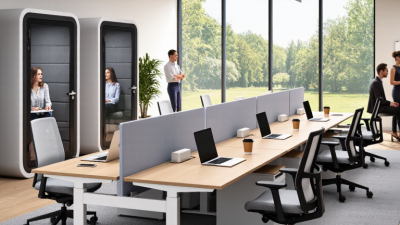
Global buyers are rethinking how offices support people, productivity, and responsible growth. The best office solutions now combine ergonomic furniture, flexible layouts, smart technology, acoustic control, and dependable after-sales service. A buyer in London may need quiet collaboration zones, while a growing team in Singapore may prioritize modular desks and efficient space use. Location changes the brief.

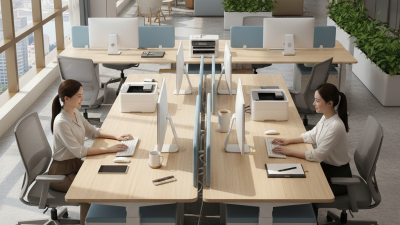
Peter Drucker, a widely respected management expert, once said, “The best way to predict the future is to create it.” His idea remains useful when evaluating modern office solutions. Buyers should not simply copy fashionable workplace designs. They need to examine employee habits, local working conditions, maintenance access, budget limits, and long-term expansion plans. Practical details matter. A height-adjustable desk should move smoothly. A video system should remain clear during busy meetings. Storage should fit real documents, not idealized samples.

There is no universal office formula. That assumption can be expensive. Even attractive solutions may fail when installation support is weak or replacement parts are unavailable. Global purchasing also requires careful attention to product quality, supplier transparency, accessibility, and responsible sourcing. These factors build trust beyond the initial sale.

This guide explores the leading office solutions for international buyers. It considers functionality, adaptability, employee experience, technology integration, and total value. Some recommendations may need refinement. That is part of the process. A reliable workplace evolves with its users, rather than pretending every need can be predicted in advance.
What Are the Top Office Solutions for Global Buyers?

Define Global Office Needs: 48% of Employees Work Hybrid (Gartner, 2023)

Global Office Solutions Must Start with Hybrid Reality

Global office planning now begins with employee patterns, not fixed desk counts. Gartner reported in 2023 that 48% of employees work in hybrid arrangements. For global buyers, this shift changes space, technology, and procurement priorities. A Monday office may need collaboration tables, while Thursday may require quiet workstations. One layout cannot serve every team.

Effective solutions should combine shared desks, private rooms, reliable video systems, and secure personal storage. Workplace studies consistently show that employees value dependable technology and suitable spaces more than decorative design. The 2023 Global Workplace Occupancy Survey also found that office utilization varies widely by location and workday. Buyers should therefore request occupancy data before purchasing furniture or expanding facilities. Small sensors and booking records can reveal unused rooms, crowded zones, and recurring peak periods.

Details matter. A hybrid office needs strong Wi-Fi, adjustable lighting, acoustic panels, and accessible power near every seat. Local facility teams should test these features during real working hours. A quiet room may still fail if nearby calls remain audible. Perfect desk ratios are unlikely. Procurement teams may also overestimate attendance because employees report intentions, not daily behavior. Regular reviews, employee feedback, and flexible contracts can reduce that risk. Gartner, 2023.

What Are the Top Office Solutions for Global Buyers? - Define Global Office Needs: 48% of Employees Work Hybrid (Gartner, 2023)

A practical reference framework for planning flexible, inclusive, healthy, and efficient workplaces across global markets.

Global Office Need Verified Data Point Recommended Office Solution Useful Specification or KPI Global Buyer Priority Reference
Flexible and hybrid work 48% of employees were reported to work in a hybrid arrangement in 2023. Modular workstations, bookable desks, focus rooms, collaboration areas, and secure remote-access infrastructure. Track desk utilization, room occupancy, booking completion, and employee satisfaction. Very High Gartner, 2023
Inclusive workplace access Approximately 1.3 billion people, or 16% of the world's population, experience significant disability. Step-free entrances, accessible washrooms, adjustable-height furniture, clear circulation, visual contrast, and assistive technology support. Review accessibility against local building codes and conduct regular user-access audits. Very High World Health Organization, Global Report on Health Equity for Persons with Disabilities, 2022
Healthy indoor air Indoor air quality is affected by ventilation, filtration, occupancy, pollutants, and building operation. Demand-controlled ventilation, effective filtration, outdoor-air monitoring, low-emission materials, and preventive HVAC maintenance. Monitor carbon dioxide, particulate matter, temperature, humidity, and ventilation performance; define local thresholds with qualified engineers. High World Health Organization, Roadmap to Improve and Ensure Good Indoor Ventilation in the Context of COVID-19, 2021
Ergonomic comfort Musculoskeletal conditions affect approximately 1.71 billion people worldwide. Adjustable chairs, sit-stand desks, monitor arms, ergonomic input devices, and workstation assessments. Provide adjustability for different body sizes and review workstation setup during onboarding and periodic safety checks. High World Health Organization, Musculoskeletal Health, 2022
Effective lighting The recognized office-lighting benchmark for reading, writing, and computer-based work is commonly 500 lux, subject to task and local standards. Glare-controlled LED lighting, daylight management, task lighting, occupancy controls, and adjustable blinds. Design and verify illuminance, glare control, uniformity, color rendering, and energy consumption. High EN 12464-1:2021, Light and Lighting — Lighting of Workplaces — Indoor Workplaces
Energy efficiency Buildings account for approximately 30% of global final energy consumption and 26% of global energy-related emissions. High-efficiency HVAC, LED lighting, occupancy sensors, smart meters, efficient equipment, and passive solar controls. Measure energy use per occupied area, peak demand, operating hours, and renewable-energy contribution. Strategic International Energy Agency, Buildings, 2023
Digital collaboration Hybrid work requires employees to collaborate across office, home, and multiple time zones. High-quality video rooms, acoustic treatment, shared digital whiteboards, room scheduling, and standardized connectivity. Track meeting reliability, audio quality, room availability, connection failures, and cross-time-zone usability. Very High International Labour Organization, Working from Home: From Invisibility to Decent Work, 2021
Privacy and concentration Open-plan environments can create noise and distraction, making privacy and quiet-work capacity important in flexible offices. Acoustic panels, enclosed focus rooms, phone booths, quiet zones, sound masking, and privacy screens. Measure noise complaints, focus-room utilization, speech privacy, and employee-rated concentration. High ISO 22955:2021, Acoustics — Acoustic Quality of Open Office Spaces
Scalable procurement and local compliance Office requirements differ by climate, building code, accessibility regulation, labor practice, and data-protection rules. Modular specifications, local compliance reviews, repairable products, standardized documentation, and regional service coverage. Evaluate total cost of ownership, lead time, warranty coverage, spare-part availability, compliance status, and end-of-life recovery. Strategic ISO 20400:2017, Sustainable Procurement — Guidance
Buyer note: Performance thresholds should be validated against the applicable national building, accessibility, occupational-safety, energy, and data-protection requirements before procurement.

Compare Flex Models: Flexible Offices May Reach 30% by 2030 (JLL)

Global buyers are rethinking the traditional office. Industry forecasts suggest flexible offices may represent nearly 30% of global office supply by 2030. This shift reflects changing work patterns, not just temporary cost pressure. Companies now need space for focused work, client meetings, and occasional team gatherings. A fixed lease may leave desks empty on quieter days. That is wasteful.

Flexible models include coworking areas, serviced offices, managed suites, and hybrid headquarters. Each option offers different control, privacy, and pricing. Experienced buyers should examine more than the monthly fee. Review internet reliability, access hours, meeting-room availability, cleaning standards, and data protection procedures. A low rate can become expensive when staff lose time solving daily problems. The forecast may be accurate, but adoption will not be equal everywhere. Local culture and property supply still matter.

Tips: Begin with real occupancy data, not assumptions. Track desk use for four to eight weeks. Test a short agreement before expanding. Ask who handles repairs, visitor access, and unexpected closures. Keep a private room for sensitive discussions. Flexible space sounds efficient, yet constant movement can weaken team connection. That deserves honest review. A useful model should support people, not merely reduce floor area.

Assess Smart Technology: 90% of Firms Plan AI Investment (Deloitte, 2024)

For global buyers, smart office technology is becoming a practical investment, not a futuristic feature. Deloitte’s 2024 research reports that 90% of firms plan to invest in artificial intelligence. McKinsey’s 2024 survey also found that 65% of organizations regularly use generative AI. These figures support demand for AI-enabled room booking, occupancy sensors, energy controls, and multilingual workplace assistants. A meeting room that adjusts lighting for video calls can improve daily usability. Small details matter.

Procurement teams should test these systems in real offices before signing global contracts. Occupancy data can reveal unused desks, crowded reception areas, and inefficient cleaning schedules. Predictive maintenance may reduce equipment downtime, but only when sensor data remains accurate. Poor calibration creates misleading reports. I have seen dashboards look impressive while employees still struggle to find a quiet room. The technology was not the only problem. Training was missing.

Security and governance require equal attention. The International Data Corporation projected worldwide artificial intelligence spending would exceed 235 billion dollars in 2024, increasing pressure to deploy quickly. Buyers should request clear data-retention rules, access controls, human review, and exportable records. Regional privacy requirements may differ across offices. A pilot with 50 to 100 users can expose language, accessibility, and workflow issues before wider deployment. Imperfect testing is still better than confident guessing.

Verify ESG Standards: Buildings Create 26% of Global Energy Emissions (UNEP)

What Are the Top Office Solutions for Global Buyers?

Global office buyers should treat ESG verification as an operating requirement, not a decorative claim. UNEP highlights that buildings create approximately 26% of global energy-related emissions. That figure changes the purchasing question. Buyers should examine how an office consumes energy every hour, not only its rental cost.

Request twelve months of utility records, energy-intensity data, renewable-energy certificates, and the emissions calculation method. Ask whether the figures include landlord systems, tenant equipment, construction, and refrigerant leakage. Boundaries matter. The IEA’s Buildings 2023 analysis identifies heating, cooling, lighting, and water heating as major energy loads. During a site visit, inspect meters, ventilation controls, daylight access, and temperature settings.

A certificate alone can reassure too quickly. UNEP’s Global Status Report for Buildings and Construction also shows that the sector remains a major source of energy demand and carbon emissions. Buyers should verify commissioning records, waste data, water performance, indoor-air-quality testing, and supplier labor policies. Compare reported energy use with the building’s size and occupancy. Numbers can mislead. A newer office may still perform poorly if systems are badly operated. Global teams should request auditable evidence, allow local regulatory differences, and record unresolved data gaps before signing.

Select Vendors by ISO 27001, SLA, Security, and Cost-per-Seat Benchmarks

Global office buyers need more than polished desks and fast onboarding. Vendor selection should begin with evidence, not sales language.

Ask for a current ISO 27001 certificate, its scope, and the latest surveillance-audit date. A certificate covering only headquarters may not protect regional sites.

That detail matters. Request a service-level agreement with measurable uptime, response windows, recovery targets, and service credits. Test the wording against a realistic incident: a badge reader fails at 8 a.m. in three time zones. Who answers, and how quickly?

Security checks should reach beyond passwords. Review visitor controls, device management, encryption, access logs, subcontractor oversight, and employee offboarding. Ask how long logs remain available and who can export them during an investigation.

Experienced procurement teams also compare cost per seat, not headline rent. Include furniture, meeting-room hours, support, connectivity, deposits, taxes, and relocation fees.

A simple table can show monthly costs for 50, 200, and 500 seats.

Yet the cheapest seat may create expensive friction when teams need flexible expansion. SLA penalties may also be too weak to change behavior. I would score proof, response quality, and operational fit separately, then record every assumption. Recheck those assumptions after a pilot month. Real offices rarely behave like spreadsheets.