10 Best System Furniture Suppliers for Global Buyers
Choosing a system furniture supplier is not simply a matter of comparing catalogs or headline prices. For global buyers, the real test is whether a supplier can deliver consistent quality across design, production, shipping, and installation. A desk may look excellent in a rendering; its cable tray, edge finish, and panel joints reveal more after daily use. Small details matter.
Robert Propst helped shape modern modular workplaces through the Action Office. He cautioned, “The office is the last place in the world where people are treated like children.” That idea still applies: system furniture should support real work, not merely fill floor plans. This guide compares ten suppliers through practical buyer questions: modular range, material options, customization, documented testing, warranty terms, and regional service. It also considers lead-time transparency, replacement-part access, and local installation capabilities.
A reliable supplier should explain limitations as clearly as capabilities. Ask for finish samples, layout drawings, load information, and written delivery assumptions before approving a large order. These checks are not glamorous. They prevent expensive surprises. No supplier is best for every project. A multinational rollout may need repeatable specifications and dependable service; smaller offices may favor flexible quantities and faster decisions. Compare evidence, not promises: request comparable project references, verify current certifications directly, and confirm who owns after-sales support. The rankings are a starting point, not a substitute for procurement review. Some needs will be missed. That is worth admitting. The strongest choice balances fit, durability, cost, and support, while leaving room for honest reassessment after installation.

What System Furniture Is and How It Meets Global Workplace Needs
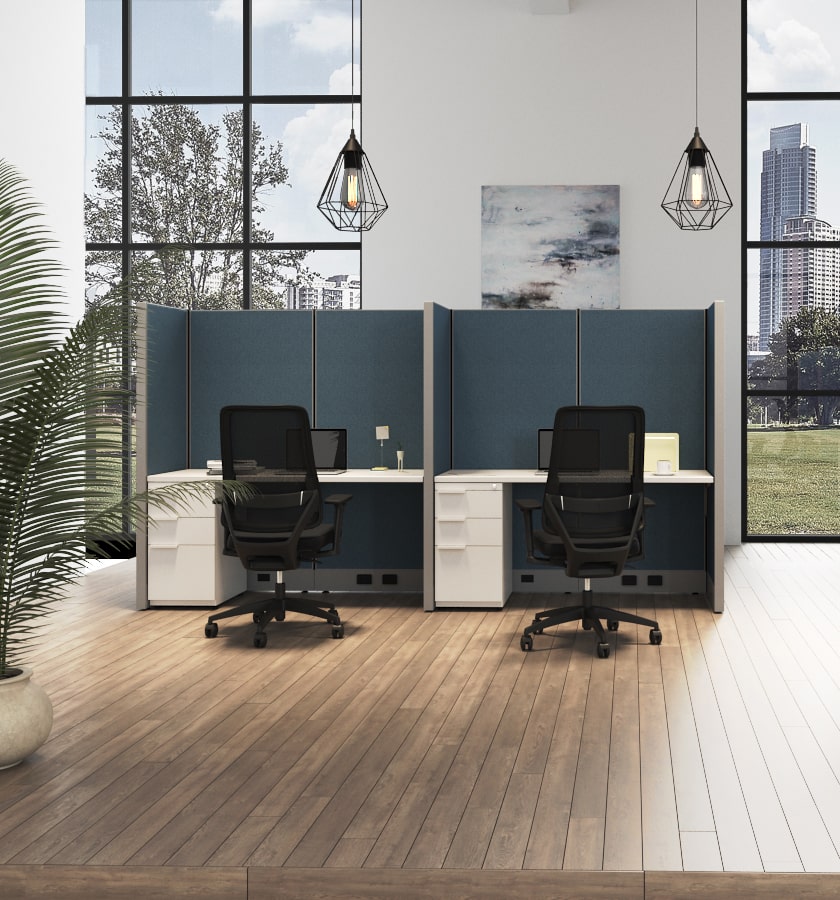
System furniture is a coordinated set of desks, screens, storage, and cable-management parts. Teams can rearrange these components as work changes, rather than replace every workstation. A typical setup might pair height-adjustable desks with shared lockers and acoustic screens. Small details matter: a screen should reduce visual distraction without blocking natural light or team communication. That matters.
Gallup’s 2024 workplace reporting found that, among U.S. employees whose jobs can be done remotely, 53% worked in hybrid arrangements, 27% worked fully remotely, and 20% worked fully on-site. This is not a global sample, but it illustrates why fixed desk layouts may not suit every workforce. Flexible furniture can support quiet tasks, quick collaboration, and changing attendance in the same office.
For global buyers, the practical challenge is balancing standardization with local needs. Modular dimensions and replaceable parts can simplify maintenance across locations, while regional teams may need different storage, privacy, or accessibility features. Fit is local. A system can look efficient on a floor plan yet feel cramped when chairs, bags, and mobility devices enter the space. Buyers should test full-scale mock-ups and check component compatibility before ordering; modularity helps, but it does not correct a poor layout.
Key Criteria for Evaluating System Furniture Suppliers
Choosing a system-furniture supplier means checking what happens after the showroom visit. Compare documented load, stability, and durability tests, not just attractive samples. Ask whether desks, screens, and storage can be reconfigured without replacing whole units. The U.S. EPA’s 2018 Advancing Sustainable Materials Management report estimates that furniture and furnishings generated 12.1 million tons of U.S. municipal solid waste. That figure makes repairability more than a marketing detail.
For global purchasing, evaluate production capacity, export packing, installation instructions, spare-part access, and warranty response times. Request references for projects of similar size, plus evidence of quality checks during production and before dispatch. Ask how the supplier handles finish variation, damaged panels, and delayed components. Ask for proof. Compare sample panels under your actual office lighting; color shifts can stand out beside a window. Check whether product documents are clear enough for local installers. Strong quotations matter, but clear exclusions matter too. I would still run a small pilot: specifications can look convincing while assembly reveals awkward joints.
Tips: Record response times and replacement-part availability during your supplier review. Keep one sample panel and one connector for comparison when deliveries arrive. A neat showroom is useful, but follow-through matters more.
Profiles of 10 System Furniture Suppliers for Global Buyers
Global buyers will find that “system furniture supplier” covers several different strengths. A modular workstation maker offers repeatable desk layouts and shared components. Ask for plans showing cable routes and screen options. A partition specialist focuses on movable walls, glass panels, and privacy. Check whether its drawings show door clearances. A height-adjustable desk supplier should provide load limits, controller details, and cycle testing. A storage-system producer is worth reviewing for drawer hardware, lock options, and replacement-part availability. Small details matter.
A benching-system supplier can suit open offices, but confirm how teams manage noise and personal storage. An acoustic-booth maker should document ventilation and usable interior dimensions, not just exterior measurements. An education-furniture supplier may offer durable desks and flexible layouts; verify surface resistance against the buyer’s actual cleaning routine. A metal-frame manufacturer can support custom dimensions and finishes, though samples may reveal uneven coating. A contract-furniture integrator coordinates multiple product categories, which can simplify purchasing but add another communication layer.
An export-focused OEM supplier may provide packaging, labeling, and shipping documentation suited to overseas orders. Buyers should still confirm tolerances, lead times, and quality checks in writing. These profiles are starting points, not rankings. A polished catalog can conceal weak after-sales support. That deserves a closer look. Ask each supplier for a recent project reference, a parts list, and one sample specification sheet before comparing offers.
Comparing Supplier Capabilities, Products, and Service Coverage
For global buyers, the strongest system furniture suppliers offer more than attractive desks and storage. Compare product range, modular compatibility, customization, documented load limits, and replacement-part availability. Ask for drawings that show cable routes, panel heights, and clearances—not just polished showroom images. The World Green Building Council’s 2014 report, Health, Wellbeing and Productivity in Offices, associates better indoor air quality with 8–11% higher productivity. Furniture alone cannot deliver that result, but layout and material choices can support healthier spaces.
Tip: Request a sample workstation and a written service map. Check who measures, installs, handles defects, and supplies parts in each destination country. Small details matter. A missing bracket can delay an entire row of desks.
Compare lead times by product category, not by a single headline estimate. Confirm packaging standards, installation instructions, warranty coverage, and local support response times. Ask suppliers to explain how they manage changes between approved drawings and delivered parts. Their answer may reveal more than a capability brochure. Pricing comparisons can still be imperfect: freight, duties, and site conditions vary, so record assumptions beside every quote.
Global Buyer Reference: Accessible Workstation Clearances
Use these U.S. ADA minimum dimensions as a reference when comparing system-furniture product specifications. They are accessibility requirements, not supplier ratings.
ADA Standards for Accessible Design: knee clearance—27 in minimum height, 30 in minimum width, and 19 in minimum depth (Section 306); clear floor space—30 in minimum width by 48 in minimum depth (Section 305). Confirm applicable local requirements for each project.
How to Select and Procure System Furniture Across Markets
Choosing system furniture across markets starts with a site survey, not a catalogue. Measure lift doors, corridors, floor loading, and workstation power access. Confirm panel dimensions, connector compatibility, fire-performance documentation, and replacement-part availability. Ask suppliers for dated test reports and written tolerances. Samples help. Yet one finish sample cannot predict batch variation across factories. Request a signed reference sample and inspect pre-shipment photographs or arrange an independent inspection. Compare freight terms, packaging, installation scope, and warranty response times for each destination. These details can determine whether a low quote stays low.
Compare lifecycle cost, not just unit price. UNEP’s Global Resources Outlook 2024 reports that global resource extraction has tripled over five decades and could rise 60% by 2060. This makes repairable frames, replaceable surfaces, and take-back options worth pricing. The IEA’s 2024 Global Status Report for Buildings and Construction estimates that buildings used 32% of global energy and generated 34% of CO2 emissions in 2023. Those figures concern buildings, not furniture alone, but they support evaluating efficient fit-outs and longer product use. Compare suppliers on documented material content and repair support. Do not assume. Local requirements vary, so obtain project-specific confirmation before ordering. Even a careful plan can miss something. Keep a contingency for shipping delays, damaged parts, and late site access.